Hornbill Bird Guide: Amazing Facts & Behavior
Did you know that the hornbill bird boasts some of the most unique beaks found in the avian world, allowing it to produce a wide array of sounds? This remarkable bird family flourishes in tropical and subtropical environments. Not only are they visually captivating, but they also play an essential role in maintaining their ecosystems. In this article, we will explore the fascinating behaviors and adaptations of hornbill birds, emphasizing their importance as indicators of environmental health. By the conclusion, you’ll gain a deeper appreciation for their distinctive characteristics and the challenges they face in an ever-evolving world.
Related Bird Species: Pet Birds: Top 12 Species, Care Tips, Diet & Lifespan Guide
About Hornbill Bird
Hornbill birds exhibit a remarkable variety in size and features. The black dwarf hornbill, the smallest in the family, weighs about 100 grams and measures around 32 cm long. On the other hand, the southern ground hornbill is the largest, weighing more than 6 kg and boasting a wingspan that can reach 180 cm. Species like the great hornbill and helmeted hornbill can surpass lengths of 1.3 meters, ranking them among the largest birds in their environments. Generally, males are larger than females, but differences can vary based on beak size and wingspan.
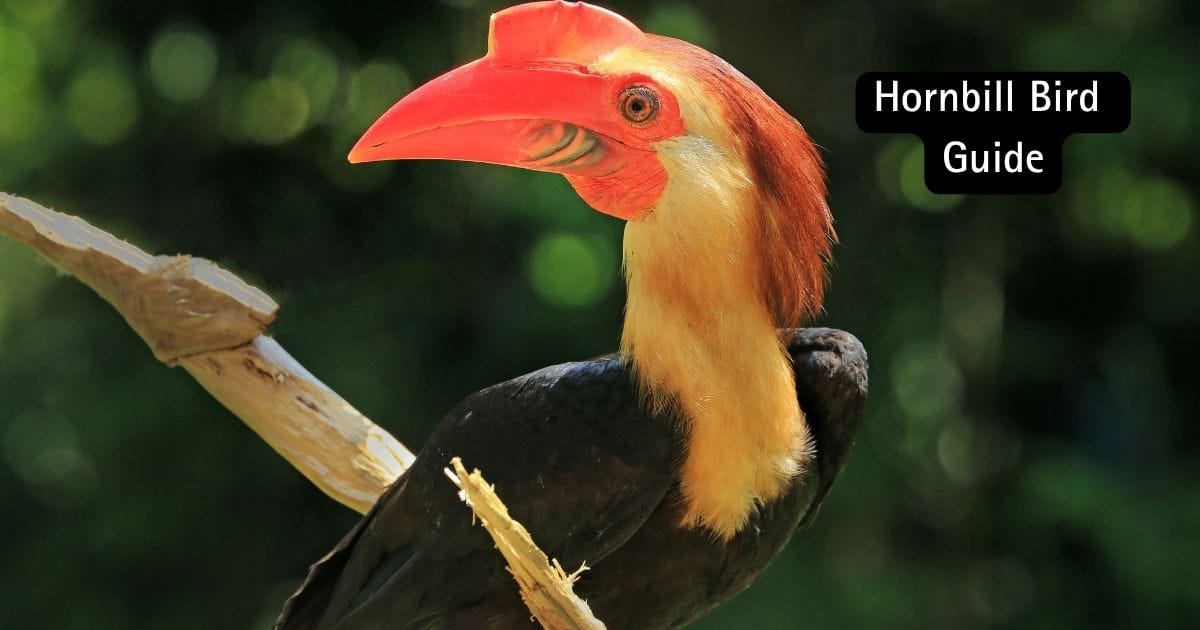
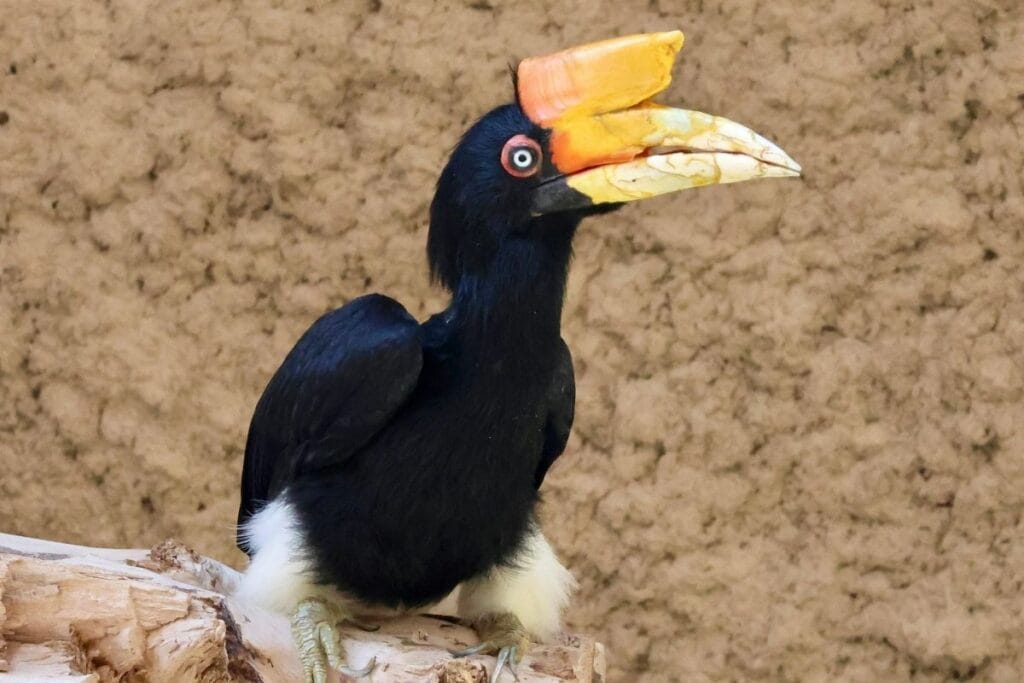
Hornbill birds are notable for their distinctive, curved beaks, which are supported by robust neck muscles and a strong skeletal framework. This remarkable bill serves multiple functions, including hunting, constructing nests, and grooming. Each species of hornbill features a unique casque, a structure located on top of the bill, that varies significantly in size and function. For some species, the casque enhances the strength of the bill, while for others, it helps amplify sounds during vocalizations. In species like the helmeted hornbill, the casque is solid and plays an essential role in intense aerial confrontations.
Hornbill birds predominantly display feather colors in shades like black, gray, white, or brown, with vibrant hues on their bills or in the skin around their faces and throats adding to their appearance. In some species, you can notice color variations between males and females. Their remarkable binocular vision helps them effectively locate and handle food. Their long eyelashes serve a dual purpose, shielding their eyes from sunlight and debris while also contributing to their unique appearance.
Hornbill Bird: Distribution & Habitat
The hornbill family includes more than 60 living species. Research suggests that some undiscovered species might still exist, especially among red-billed hornbills. You can find these birds mainly in Sub-Saharan Africa, the Indian subcontinent, Southeast Asia, and certain Pacific regions like the Philippines and the Solomon Islands. Interestingly, Africa and Asia do not share a common hornbill genus, showing that their evolution has followed separate paths.
Hornbills are mainly tree-dwellers and prefer forested habitats. However, species such as ground hornbills thrive in open savannas. In Africa, they adapt to various environments, from arid regions to thick forests. Conversely, Asian hornbills predominantly inhabit forested areas and seldom venture into open spaces.
The Indian subcontinent is home to various hornbill species scattered throughout India and its neighboring regions. Certain species are unique to places like Sri Lanka. Southeast Asia, especially Indonesia and the Philippines, has a rich diversity of hornbills. Many species in the Philippines inhabit particular islands. This makes them susceptible to dangers, underscoring the importance of conservation efforts.
Fossils show that hornbill birds used to inhabit a much larger range. During the Miocene epoch, they spread to areas like North Africa and parts of Europe. The oldest hornbill fossils, around 19 million years old, give valuable insight into their long evolutionary journey.
Behavior and Ecology of Hornbills
Hornbills mainly operate during the day, showing their greatest activity when the sun is up. You usually spot them in small groups, such as pairs or family units. Yet, outside of breeding seasons, these birds frequently come together in larger flocks. This behavior becomes especially noticeable at communal roosting areas, where they can gather in the hundreds or even thousands to spend the night.
Diet and Feeding Habits
Hornbill birds are omnivores with a varied diet. They eat fruits, insects, and small animals. One interesting aspect of their feeding is related to their anatomy. Hornbills have short tongues, which makes it difficult for them to swallow food from the tip of their beaks. Instead, they quickly toss food back into their throats using a swift head motion.
Forest-dwelling hornbills mainly feed on fruit. This behavior makes them important seed dispersers, helping to maintain ecological balance. In contrast, hornbills in open habitats eat more animal-based foods. Some hornbills even consume fruits that contain natural toxins. This showcases their unique evolutionary adaptations to fit their dietary needs.
Hornbill Bird: Territorial Behavior
Certain species of hornbills exhibit territorial behavior, actively defending specific areas, particularly in environments where food resources are scarce. In contrast, fruit-eating species are generally less territorial, as the distribution of fruit trees is often sparse. This scarcity compels them to travel significant distances in search of sustenance, making them less inclined to defend a specific territory.
Breeding and Nesting Practices
Hornbills display unique and fascinating mating habits. Many species of hornbills choose a lifelong partner and construct their nests in the natural hollows of trees or on rocky cliffs. Sometimes, they may also take over nests left behind by other birds.
A notable aspect of hornbill breeding is their nesting technique. The female hornbill closes herself off inside the nest cavity using a blend of mud, feces, and remnants of food, leaving only a small opening. Through this confined space, the male supplies nourishment to the female and later to the hatchlings, offering a layer of protection from potential predators.
The female typically lays a limited number of eggs, varying with the species, and remains within the nest throughout the incubation period. During this time, she may also undergo a complete molt, shedding and replacing her feathers. Once the chicks become more developed, she breaks free from the nest, and both parents take on the responsibility of feeding and nurturing their young.
Interactions with Other Species
Hornbill birds participate in intriguing relationships with different animal species. In various areas of Africa, certain hornbill species team up with small mammals, such as mongooses, to improve their ability to spot predators. Furthermore, hornbills often trail larger animals, benefiting from the insects that are disturbed and revealed during their movements.
Classification and Evolution
Hornbills belong to the Bucerotidae family, a classification introduced in the early 1800s. This family can be divided into two main categories: ground hornbills, which typically live on the ground, and tree-dwelling hornbills, the most numerous group among them.
Current scientific investigations are focusing on their classification using genetic evidence. Research indicates that some African hornbill species may have an earlier evolutionary origin, while many others emerged later in Asia. These insights underscore the intricate and extensive evolutionary background of hornbills.
Taxonomy and Classification of Hornbills
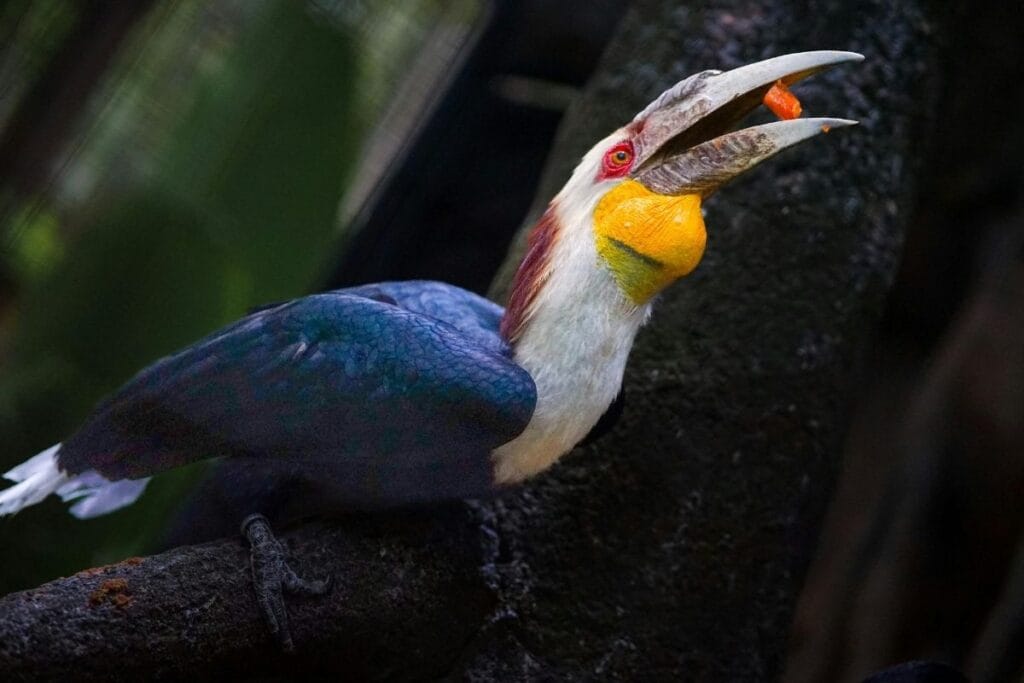
The hornbill family includes more than 60 species currently recognized, with ongoing research suggesting that there may be additional, yet-to-be-discovered types, especially among the red-billed hornbills. These birds inhabit regions across Sub-Saharan Africa, the Indian subcontinent, Southeast Asia, and certain Pacific islands, including the Philippines and the Solomon Islands. Interestingly, no hornbill species share a genus between Africa and Asia, highlighting their separate paths of evolution.
Hornbills primarily thrive in forest environments, but certain species, like ground hornbills, prefer savanna habitats. In Africa, they adapt to a range of landscapes, from dry zones to dense forests, while Asian hornbills predominantly associate with wooded areas and typically avoid open spaces.
In the Indian subcontinent, various hornbill species can be seen throughout India and nearby regions, with some being exclusive to particular areas, such as Sri Lanka. Southeast Asia, especially in countries like Indonesia and the Philippines, boasts a diverse collection of hornbills. Many species endemic to the Philippines are confined to specific islands, increasing their vulnerability and the need for conservation efforts.
Fossil evidence reveals that hornbills once had a much broader distribution than today. During the Miocene epoch, they roamed regions including North Africa and parts of Europe. The oldest known hornbill fossils, estimated to be around 19 million years old, provide valuable insights into their extensive evolutionary history.
Key Genera of Hornbills
Hornbills are classified into various genera, each comprising distinct species. The main groups are:
- Bucorvus: Ground hornbills.
- Tockus: Common African hornbills.
- Lophoceros: A newly recognized group identified through genetic analysis.
- Bycanistes: Large hornbills native to African forests.
- Buceros: Home to well-known species such as the great hornbill.
- Rhinoplax: The helmeted hornbill.
- Rhyticeros: Large hornbills found in Asia.
- Penelopides: Hornbills from the Philippines.
- Anthracoceros & Ocyceros: Groups of Asian hornbills.
Cultural Importance of Hornbills
Hornbills carry significant cultural and symbolic value worldwide. While most hornbills feature lightweight, air-filled casques, the helmeted hornbill is distinct with its dense “hornbill ivory” casque, prized in China and Japan for intricate carvings and traditional art. In some cultures, this material was also used in hunting and decoration.
In Borneo, the Iban community holds hornbills in high esteem. They regard the rhinoceros hornbill, known as the Kenyalang, as the “king of birds” and believe it serves as a spiritual communicator. The wreathed hornbill also plays an important role, acting as a guide for souls embarking on their journey to the afterlife.
Conservation Status of Hornbills
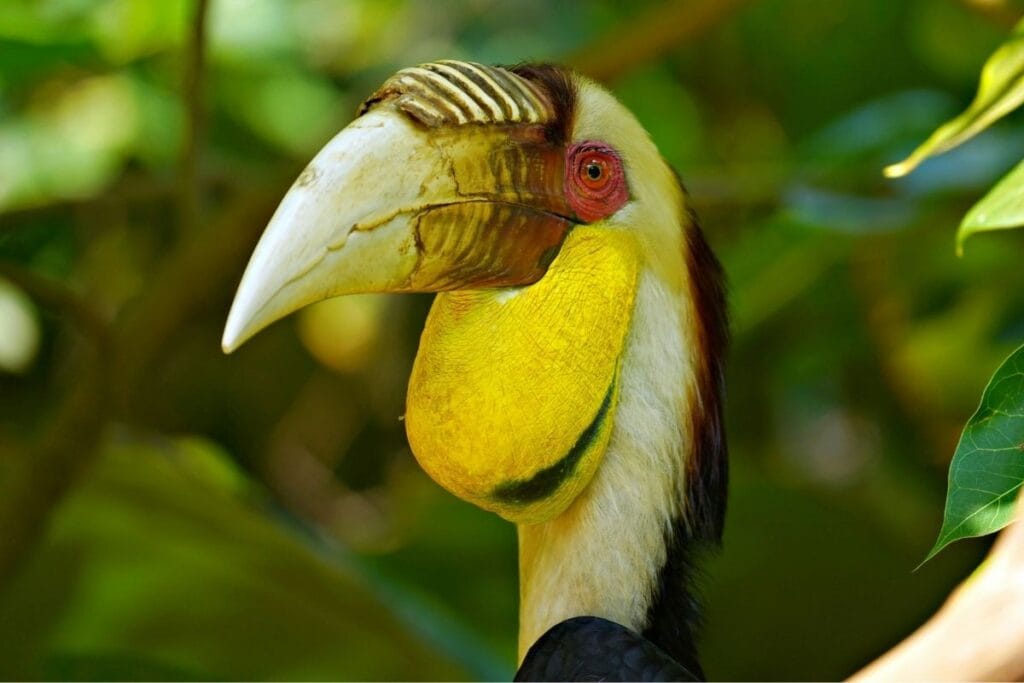
Hornbill birds exhibit a wide range of conservation statuses around the globe. In Africa, the majority of species are not facing immediate threats; however, many species in Asia are endangered due to habitat destruction and hunting, as they depend on primary forests for survival.
In mainland Asia, a limited number of hornbill species, including the plain-pouched and rufous-necked hornbills, can be found, while most are located on islands. The Philippines is home to several critically endangered species. The Palawan hornbill is classified as vulnerable, whereas the Mindoro hornbill is considered endangered. The Visayan hornbill holds an endangered status from the IUCN and is critically endangered at the local level, with its Ticao subspecies officially recognized as extinct in 2013.
Among the rare hornbill species, the Sulu hornbill is severely at risk, with only a few dozen mature individuals remaining. The helmeted hornbill is facing a critical endangerment status, significantly impacted by illegal hunting for its valuable casque.
Hornbills in Modern Culture
The hornbill bird is a notable presence in popular culture, exemplified by characters like Zazu from The Lion King. In Malaysia, these birds are symbolically significant in politics, representing the state of Sarawak. Additionally, in India, the great hornbill is recognized as the official state bird of Kerala, highlighting the critical need for conservation initiatives.
Conclusion
In conclusion, the hornbill bird is a fascinating species that showcases remarkable adaptations and behaviors within its habitat. From their unique nesting methods to their crucial role in seed dispersal, hornbills contribute significantly to their ecosystems. Understanding these birds not only enhances our appreciation for biodiversity but also highlights the importance of conservation efforts to protect their habitats. Observing hornbills in the wild can be a mesmerizing experience for birdwatchers and nature enthusiasts alike. To further explore the captivating world of hornbills, consider visiting a local wildlife sanctuary or participating in guided birdwatching tours.