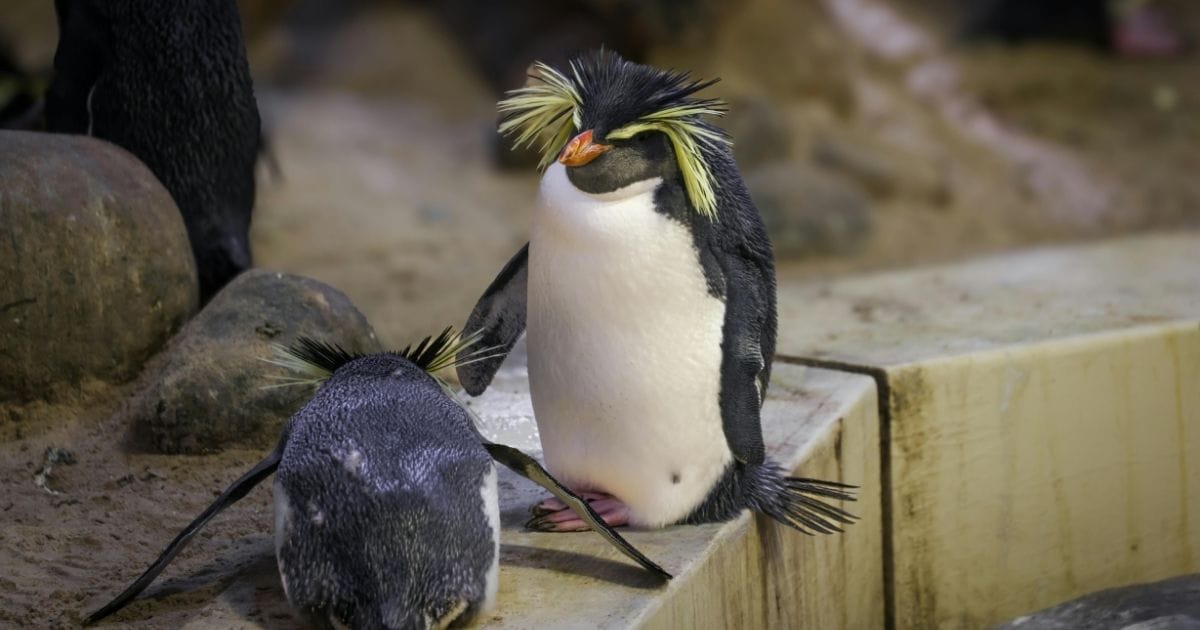
Macaroni Penguin: Amazing Facts, Habitat, Diet & Behavior
Penguins are a unique group of seabirds that have lost the ability to fly, having descended from avian ancestors millions of years ago. As they adapted to life in the water, they evolved into exceptional swimmers rather than birds of the sky. Among the various penguin species, the macaroni penguin is particularly notable for its vibrant appearance.
The macaroni penguin (Eudyptes chrysolophus) stands out as one of the most widely distributed crested penguins across the Southern Hemisphere. This species significantly contributes to marine ecosystems, making it an important focus of research. Scientists regularly study its behavior, migratory patterns, and fluctuations in population numbers to better understand its role in the environment.
This article delves into comprehensive information about the macaroni penguin, covering aspects such as its history, classification, physical characteristics, natural habitat, diet, behaviors, and conservation status.
Macaroni Penguin Discovery and Classification
The macaroni penguin was first formally described in 1837 by the German naturalist Johann Friedrich von Brandt during his studies in the Falkland Islands.
In terms of its scientific classification, the macaroni penguin is categorized as follows:
- Genus: Eudyptes
- Family: Spheniscidae
- Species: Eudyptes chrysolophus
The genus name, Eudyptes, is derived from Greek, signifying “good diver,” which highlights the penguin’s remarkable swimming prowess. The species name, chrysolophus, translates to “golden crest,” a nod to the penguin’s striking yellow head feathers.
Recent genetic research indicates that the macaroni penguin separated from the royal penguin around 1.5 million years ago. While most scientific resources recognize these as distinct species, there is ongoing debate among some researchers regarding whether the royal penguin should instead be classified as a subspecies of the macaroni penguin. This discussion reflects the complexities and nuances in avian taxonomy, particularly among closely related species.
Physical Characteristics
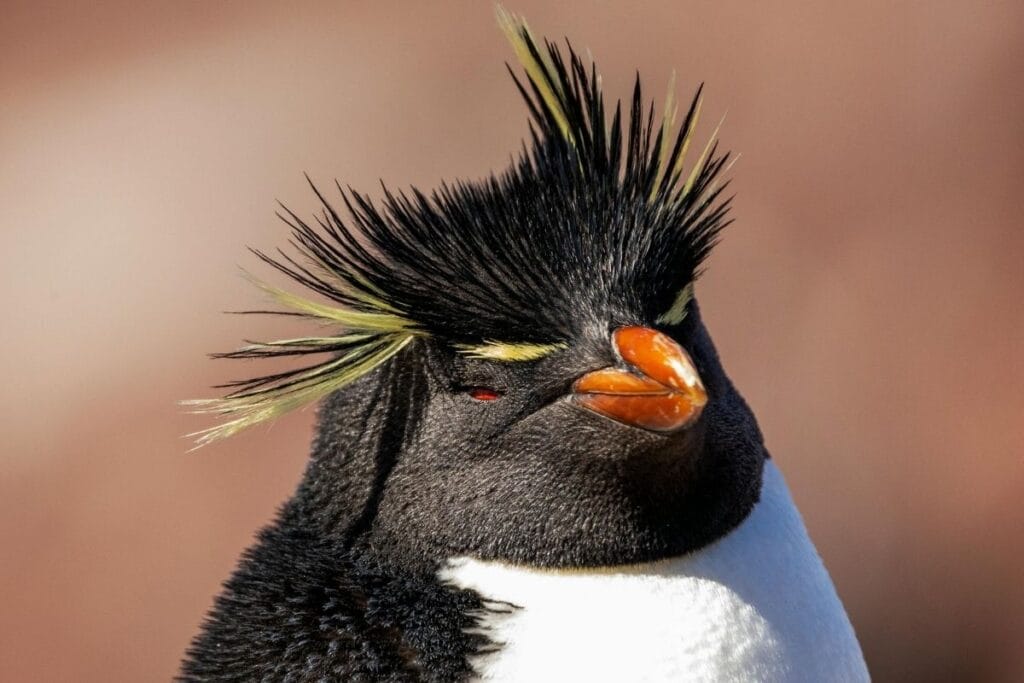
Macaroni penguins are medium-sized seabirds known for their unique and easily identified traits.
General Appearance of Macaroni Penguin
- Height: Approximately 70 cm (28 inches)
- Weight: Ranges from 3 to 6.4 kg, varying by season
- Body: Features a black upper body contrasted by white underparts
- Crest: Characterized by long yellow-orange feathers that stretch from the forehead to the back of the head
- Eyes: Notable red irises framed by pink patches of skin
Sexual Dimorphism
Male macaroni penguins are typically larger and possess thicker bills when compared to females. This difference in bill size is often utilized in scientific research to differentiate between the sexes.
Juvenile Characteristics
Young macaroni penguins exhibit several distinct features that set them apart from adults, including:
- Size: Smaller in overall body size
- Plumage: Displays a less vibrant coloration
- Crest Development: Immature penguins lack the fully developed crest, which matures after 3 to 4 years
Seasonal Changes
Macaroni penguins experience changes in their plumage throughout the seasons. Newly grown feathers appear bluish-black, while older feathers tend to show signs of wear, taking on a slightly brownish hue over time.
Diet and Feeding
Macaroni penguins are carnivorous seabirds that depend significantly on marine environments for their nourishment. Their diet predominantly consists of:
- Krill: This is their primary food source and essential to their survival.
- Small Fish: These provide additional nutrients.
- Squid and Other Cephalopods: These are included in their varied diet.
The reliance on krill highlights the importance of healthy ocean ecosystems and the availability of plankton, as these factors directly influence the penguins’ food supply.
Hunting and Diving Capabilities
Macaroni penguins are exceptional divers, able to plunge to depths exceeding 100 meters in pursuit of food. In order to find their feeding grounds, they may journey over extensive distances, covering hundreds of kilometers.
They employ a distinctive hunting strategy known as porpoising, which involves leaping above the water’s surface while swimming at high speeds. This method offers multiple advantages, including:
- Energy Efficiency: It conserves energy during prolonged travel.
- Enhanced Breathing: This technique allows for more efficient oxygen intake.
- Predator Evasion: It helps them avoid threats from predators like seals.
Overall, the unique adaptations and behavioral strategies of macaroni penguins are crucial for their survival in the challenging marine environment.
Social Structure and Behavior
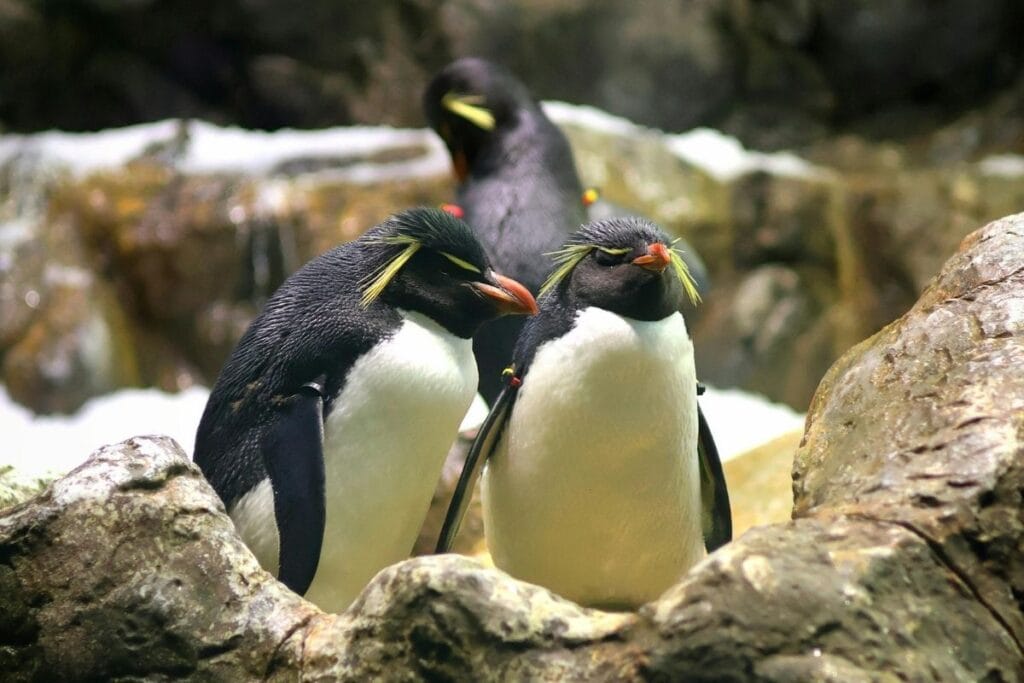
Macaroni penguins are known for their highly social nature, often forming vast colonies that can number in the tens of thousands. This communal living not only enhances their social interactions but also provides safety in numbers.
Breeding Habits
The breeding period typically starts in October. During this time, these penguins create nests using materials such as stones and grasses. Females usually lay a clutch of two eggs; however, it is common for them to successfully rear only one chick to maturity.
Parental Responsibilities
Both male and female macaroni penguins actively participate in raising their young. Initially, males take on the role of incubating the eggs, while females leave the nest to forage for food. Once the chicks hatch, they are often gathered into groups known as crèches, which serve to safeguard them against potential threats.
Communication Methods
Each macaroni penguin possesses a distinct vocalization that helps them identify their mates and chicks, particularly in the bustling atmosphere of their colonies. This unique call is essential for maintaining family bonds amidst the crowd.
Seasonal Migration
Following the breeding season, adult macaroni penguins embark on extended journeys across the ocean, often covering distances exceeding 10,000 kilometers. These migrations typically last several months, providing vital feeding opportunities and enabling them to thrive in varying marine environments.
Habitat and Distribution
Macaroni penguins thrive in some of the most challenging climates of the Southern Hemisphere, particularly on subantarctic islands.
Key Locations
- South Georgia Islands
- South Sandwich Islands
- South Orkney Islands
- Falkland Islands
- Crozet and Kerguelen Islands
Habitat Preferences
These penguins are typically found along:
- Rocky coastlines
- Steep cliffs
- Icy marine zones
Additionally, the climate and oceanographic conditions significantly influence their breeding success and food availability.
Predators and Threats
Macaroni penguins encounter various natural and environmental challenges.
Natural Predators
- Leopard Seals: The primary threat to adult penguins
- Killer Whales
- Skuas and Giant Petrels: Known to prey on eggs and chicks
Conservation Status
Although the global macaroni penguin population is estimated at around 18 million, they are designated as Vulnerable on the IUCN Red List.
Factors Contributing to Population Decline
- Decreasing krill availability due to climate fluctuations
- Rising ocean temperatures
- Human impacts on marine habitats
Conservation Efforts
Current initiatives aimed at protecting macaroni penguins include:
- Monitoring of breeding colonies
- Establishing marine protected areas
- Conducting research on population trends
- Studying the impacts of climate change
Safeguarding the Southern Ocean ecosystem is vital for the continued survival of this species.
FAQs
Where do Macaroni Penguins live?
These penguins primarily inhabit islands in the South Atlantic Ocean, such as South Georgia, Crozet Islands, and the Falkland Islands. They prefer rocky shores and often nest in large colonies.
What do Macaroni Penguins eat?
Macaroni Penguins primarily feed on krill, squid, and small fish. Their diet can vary based on the availability of prey in their habitat.
Are Macaroni Penguins endangered?
Macaroni penguins are listed as Vulnerable on the IUCN Red List due to risks from climate change and overfishing. Conservation efforts are underway to monitor and protect their habitats.
How fast can Macaroni Penguins swim?
Macaroni Penguins are remarkable swimmers, adept at gliding through the water with impressive speed. They can achieve velocities of 6 to 7 miles per hour, which translates to approximately 10 to 11 kilometers per hour. Their efficient movement is largely due to their powerful flippers, which they use to navigate their aquatic environment with ease.
What adaptations help Macaroni Penguins survive in their environment?
These penguins have a thick layer of blubber for insulation against cold temperatures, waterproof feathers to keep them dry, and agile swimming abilities to catch prey and evade predators.
Conclusion
The macaroni penguin stands out as an exceptional seabird, showcasing the remarkable variety and resilience of life in harsh environments. Its unique appearance, strong social interactions, and incredible ability to adapt make this species one of the most fascinating members of the penguin family. As such, it offers valuable insights into survival in extreme conditions.
However, despite their relatively large population, ongoing environmental changes pose significant risks to their future. Protecting marine ecosystems, especially those rich in krill, is crucial for ensuring their population remains stable. Efforts to understand and conserve macaroni penguins are essential not only for maintaining biodiversity but also for the overall health of the Southern Ocean ecosystem.
Explore More: Pet Birds: Top 12 species, Care Tips, Diet & Lifespan Guide