Why Is My Cat Losing Weight? Weight Loss in Cats
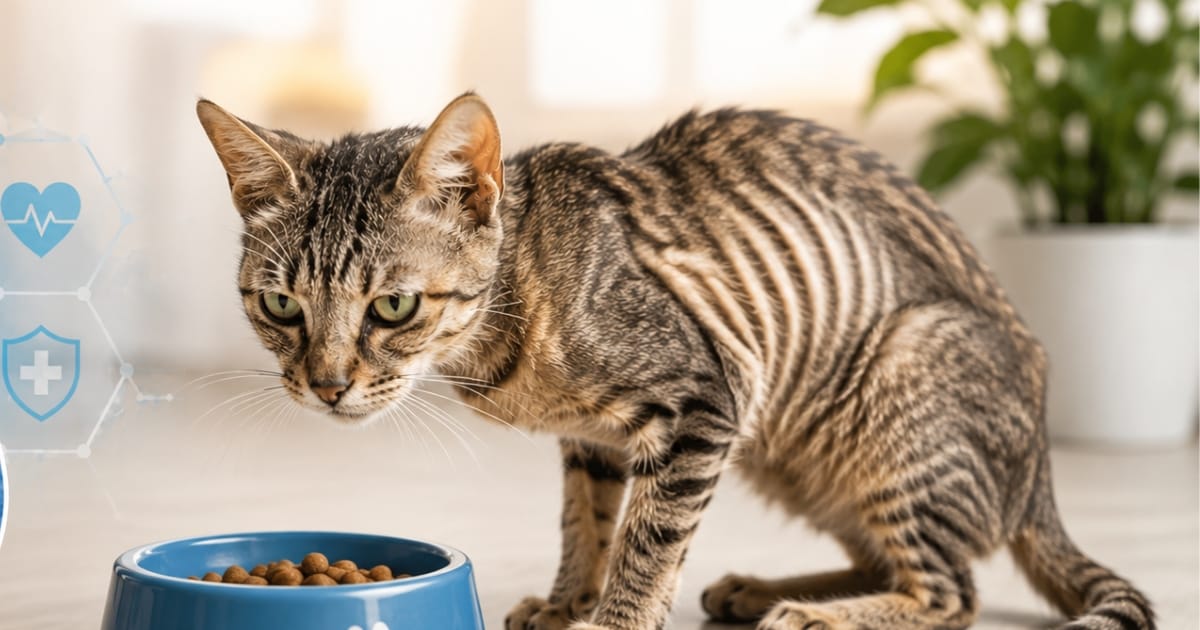
Cat losing weight can be a sign of an underlying health issue, especially if you’re not sure why it’s happening. You may notice that your cat isn’t eating enough, and when you pick them up, they may feel lighter, with their body feeling less padded than usual. Because a cat’s fur can hide gradual changes in body condition, this kind of weight loss is often noticed later than pet parents expect.
Weight loss can be caused by conditions like dental disease, intestinal parasites, or more serious conditions like diabetes, hyperthyroidism, kidney disease, or other medical concerns. Any unexplained weight loss, especially in senior cats, warrants a veterinary visit to identify the cause and start appropriate treatment if needed.
Why do cats lose weight?
When your cat starts losing weight, it may be a sign that something is affecting their health. Some cats lose weight because dental problems make eating painful, while digestive disorders can prevent the body from properly absorbing nutrients. Conditions such as hyperthyroidism, diabetes, kidney disease, and other medical issues can also cause significant weight loss, even when a cat continues to eat normally or seems to have a good appetite.
Identifying the underlying cause early is essential, as proper veterinary care, appropriate nutrition, and timely treatment can help your cat regain a healthy weight.
What are some signs your cat might be losing weight?
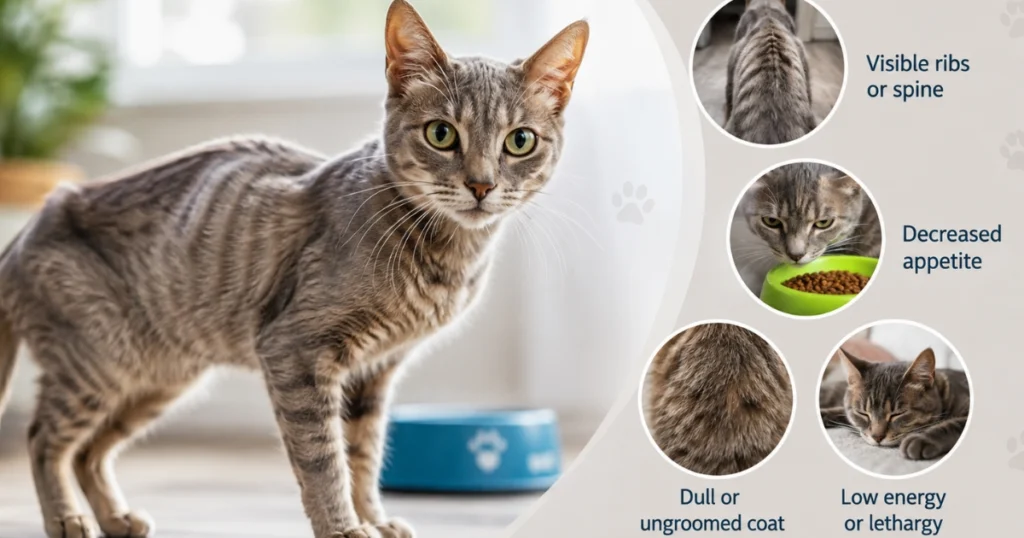
Weight loss in cats often happens slowly, so it’s easy for pet owners to miss the early signs. Since you see your cat every day, small changes in their body can be hard to notice right away. Here are some signs to watch for:
- Thinner face: Your cat’s face may look less full, especially around the cheeks or eyes.
- Protruding bones: You may be able to feel the spine, hips, or ribs more easily than before.
- Feeling lighter: Your cat may feel lighter or less solid when you pick them up.
- Lower energy: Your cat may seem more tired, less active, or less interested in playing.
- Visible waist or tucked belly: Looking at your cat from above, you may notice a more defined waist, or their belly may look tucked in rather than rounded.
- Dull or rough coat: Weight loss can sometimes affect the coat too, making it look less shiny or feel rougher than usual.
- Less interest in food: Some cats eat less overall, while others may still eat but show less enthusiasm at mealtime.
- Weaker or slower movements: You might notice your cat jumping less, struggling with stairs, or moving more slowly than usual.
Cats with a thick coat, or those who don’t like being picked up, can make these changes harder to spot. Regular vet visits for weigh-ins and checkups remain one of the best ways to track your cat’s body condition and catch problems early.
How can I track my cat’s weight at home?
While your vet weighs your cat at each visit, checking in at home helps you catch changes sooner. You can use a baby scale, or hold your cat while standing on a regular scale, then subtract your own weight for an estimate.
No scale? Try a body condition scale instead. It assigns a simple score to your cat’s shape, so you can track changes over time just by looking and feeling. Keeping an eye on appetite at mealtimes is helpful too — eating less or more than usual can be an early clue.
For best results, weigh your cat around the same time of day and jot the number down each time — a simple note on your phone works fine. Checking in every couple of weeks is usually enough to spot a real trend, rather than just a one-off dip.
Common Causes of Weight Loss in Cats
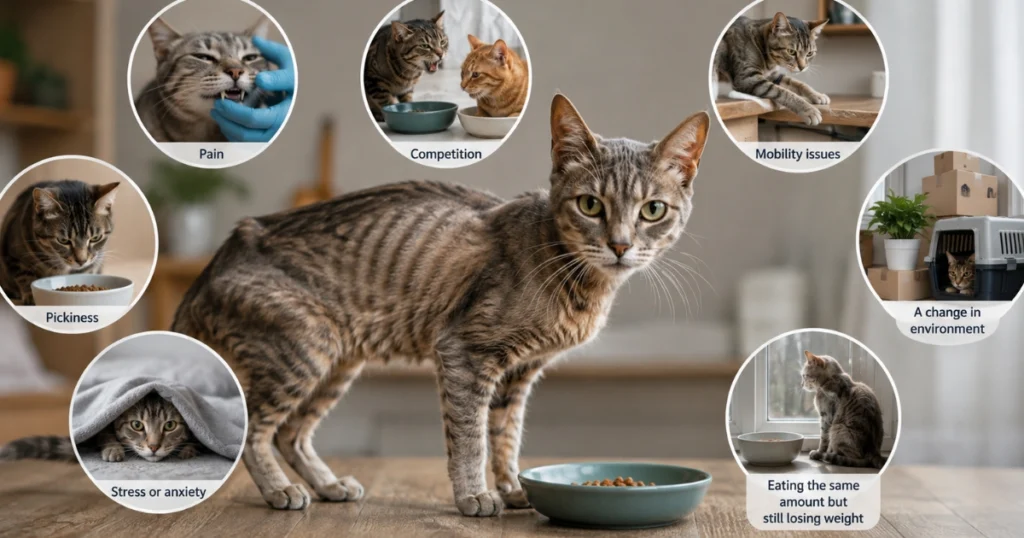
A cat losing weight can have several different causes, and figuring out which one applies to your cat is the first step toward helping them.
Not eating enough food
This is one of the more obvious causes of weight loss in cats. What’s harder to pin down is why the appetite changed in the first place. Here are some common reasons a cat may not be eating enough:
- Pain: A cat dealing with pain, whether it’s a sore tooth or discomfort elsewhere in the body, often eats less.
- Competition: Another cat, or even a dog, may be keeping your cat away from their food bowl.
- Mobility issues: If the food bowl sits somewhere hard to reach, like a high counter, a cat with joint or mobility trouble may avoid it.
- Pickiness: Some cats simply won’t eat food they don’t like, even if it’s a brand they used to enjoy.
- Stress or anxiety: A move, a new pet, or a new person in the house can all cause a cat to eat less for a while.
Sometimes, though, a cat keeps eating the same amount and still loses weight. When that happens, their body is usually burning more energy than normal or struggling to absorb nutrients properly, both signs of an underlying health issue. The next section covers some of the conditions that can affect how a cat’s body processes food.
Intestinal Parasites
When a cat’s digestive system isn’t working properly, it can struggle to break down food or absorb nutrients, and weight loss follows. Common culprits include intestinal parasites, inflammatory bowel disease, and pancreatitis. Along with weight loss, you might also notice vomiting, diarrhea, or a cat eating less than usual.
Diabetes
Diabetes tends to show up in middle-aged and senior cats, and overweight cats face a higher risk. What makes it tricky is that these cats are often hungrier than normal, yet still lose weight, because their bodies can’t properly convert food into energy. This happens when the body doesn’t produce enough insulin, or can’t use it effectively, so sugar builds up in the blood instead of fueling the body’s cells. You might also notice your cat drinking more water and urinating more often than usual.
Hyperthyroidism
This is common in older cats and happens when the thyroid gland produces too much hormone, pushing the body’s metabolism into overdrive. Cats end up eating the same amount, or even more, while still dropping weight, because their body is burning through calories faster than they can take them in. You might notice your cat seeming more restless or hyperactive, or having a faster heart rate. Left untreated, hyperthyroidism can also put extra strain on the heart and other organs over time.
Kidney disease
As cats get older, their kidneys slowly lose the ability to filter waste properly. This lets toxins build up in the blood, which often makes a cat feel nauseous and eat less. Increased urination, bad breath, and mouth ulcers are also common signs. Regular veterinary check-ups, including routine blood tests and urinalysis, are essential tools for early detection of kidney issues. Dietary modifications, hydration support, and medications may offer your cat a better quality of life.
Tumors
Both cancerous and noncancerous tumors can lead to weight loss. Depending on location, a tumor might make a cat feel nauseous or uninterested in food, or it may simply consume calories the body needs elsewhere, leaving less available for normal function. Tumors in the mouth or throat can also make eating physically painful or difficult, while ones in the stomach or intestines can interfere with digestion directly. A vet can check for tumors through a physical exam, bloodwork, or imaging like an ultrasound or X-ray.
What the pattern of weight loss can tell you
Cats can experience gradual weight loss of no more than 1-2% of body weight per week. This slow transition is often less urgent, but it can still signal the need for better nutrition or support for weight management.
Sudden weight loss is marked by a loss greater than 5% of body weight in a short period. It may indicate serious health conditions such as diabetes, kidney disease, or hyperthyroidism. It’s essential to differentiate between muscle loss and fat loss during weight reduction.
When weight loss happens fast
When a cat losing weight suddenly becomes noticeable, it can signal a serious problem. If a cat suddenly stops eating, the body starts breaking down fat reserves for energy, and that fat can build up in the liver faster than it can be processed, leading to a dangerous condition called hepatic lipidosis, or fatty liver.
This kind of sudden weight loss can also point to other illnesses that make a cat feel unwell, such as diabetes or kidney disease. Keeping an eye on changes in appetite and activity level can help catch these issues early. If your cat stops eating or starts losing weight quickly, it’s worth getting them checked by a vet right away.
How vets get to the bottom of it
Vets usually start with a physical exam, checking for lumps, dehydration, or dental pain that could explain reduced eating. Bloodwork often comes next, revealing thyroid problems, infections, or organ issues, while a urine test can flag kidney or metabolic concerns. If something looks off, imaging like an X-ray or ultrasound may follow to confirm the cause, whether it’s a tumor, blockage, or something else.
Treating a cat who is losing weight
Treatment depends on the underlying cause. Once identified, medication, a diet change, or both can often help a cat regain lost weight. Cats seven and older are more prone to conditions like kidney disease, hyperthyroidism, and diabetes, which is why many vets recommend twice-yearly checkups instead of once. This helps catch problems early, and since your cat gets weighed at each visit, you get a reliable way to track their weight over time.
Final Thought
Weight loss in cats can point to a lot of different things, everything from stress and dental pain to more serious illnesses hiding underneath. That’s exactly why it shouldn’t be brushed off. If something feels off, don’t wait it out. Your vet can run the right tests and guide you toward whatever your cat actually needs.
Why Is My Cat Losing Weight FAQs
Is there a standard weight range for adult cats?
The average weight for most adult cats ranges from 8 to 12 pounds. Some breeds may be larger or smaller and have different ideal weights.
Can I use body condition scoring to determine my cat’s weight?
Yes! Body condition scoring (BCS) uses a scale of 1 to 9 to assess a cat’s fat cover. A score of 4 to 5 indicates a healthy weight, while lower or higher scores suggest underweight or overweight conditions, respectively.
How can I tell if my cat’s weight loss is serious?
If your cat loses more than 10% of their body weight within a few weeks, shows lethargy, or has changes in behavior, it’s important to consult a veterinarian immediately.
Should I change my cat’s food if cat losing weight?
No, not without checking with your vet first. If a change is needed, they’ll usually recommend a specific diet, often higher in calories, to help your cat gain weight back safely.