Does My Cat Love Me as Much as I Love Her?
One sign of affection is when your cat follows you around the house. Cats often show love in simple ways, such as slow blinking, staying close to you, or curling up beside you. These behaviors can show that your cat feels safe, comfortable, and connected to you.
12 Signs Your Cat Loves You
Understanding cat behavior, body language, and vocalizations can help you recognize how your feline friend feels and communicates. From slow blinks and tail movements to purrs and meows, learn the signs that reveal your cat’s emotions, comfort, and affection. Want to know if your cat truly loves you? Look for these common signs of feline affection:
Slow Blinking

If your cat looks at you and slowly blinks, it can be a sweet sign of trust and affection. Slow blinking shows that your cat feels comfortable and safe around you. Try slowly blinking back, as this can be a simple way to show your cat that you trust them too.
Headbutting
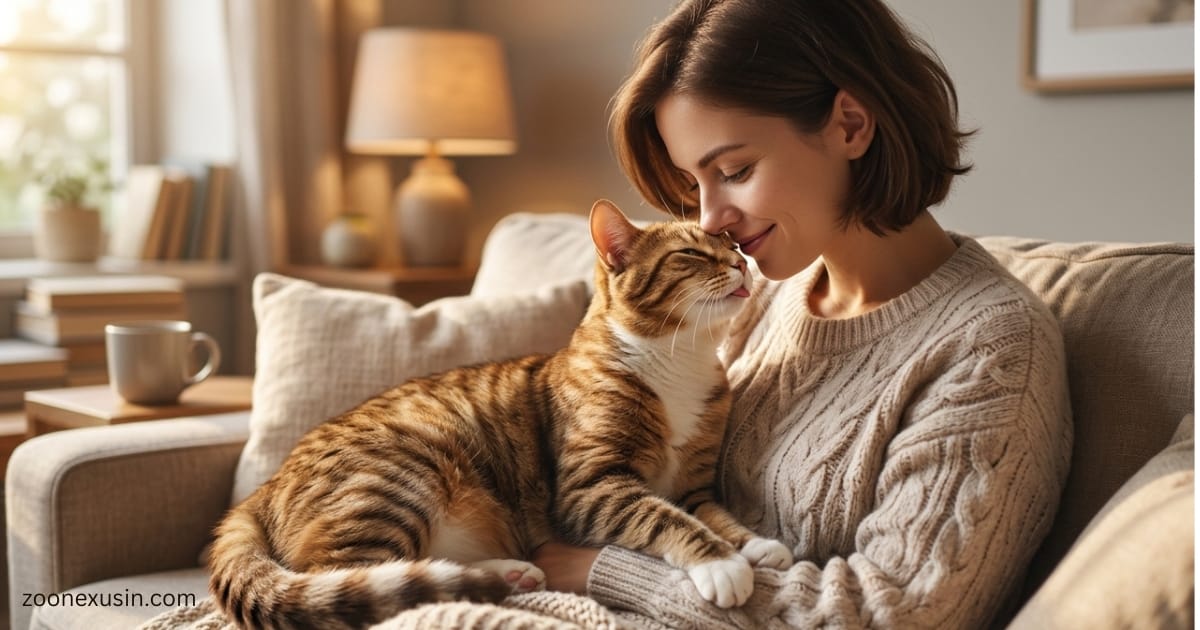
When your cat gently bumps its head against you or rubs its cheeks on you, it is usually a sign of affection and trust. Cats use the scent glands around their face to leave their scent on people they trust, which also helps strengthen their bond with you.
Grooming
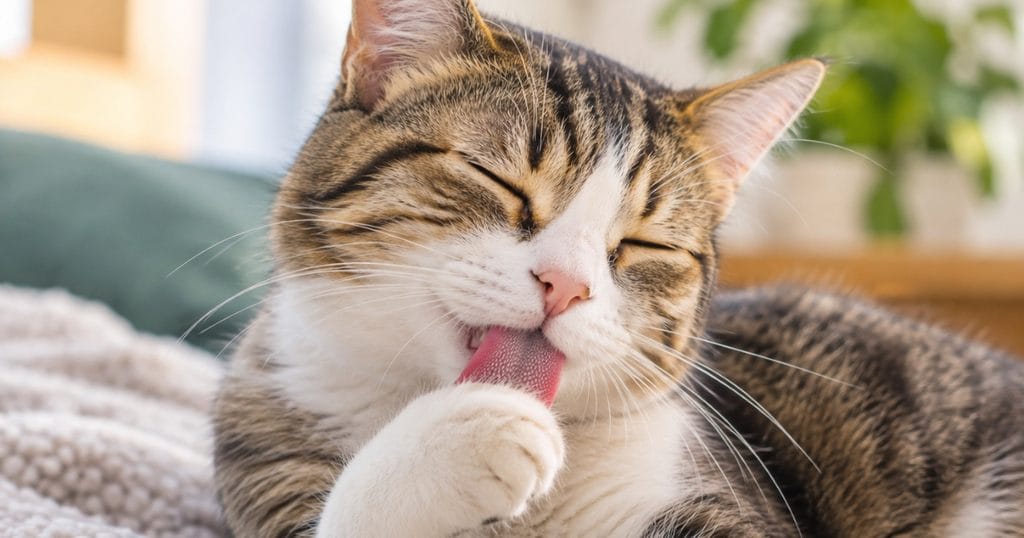
Cats often lick their humans as a sign of affection, akin to how they would groom fellow felines within their social group. This behavior typically emerges when trust is firmly established, showcasing your cat’s comfort and connection with you. While gentle licking is a sweet demonstration of affection, be mindful of overstimulating your cat during these moments. If the grooming escalates into nipping or if your cat starts growling or hissing, it may be a cue that they need some space.
Kneading
Since kneading is rooted in kitten instinct, cats will sometimes do it on blankets, beds, or stuffed animals with no connection to a specific person. It is mainly a comfort behavior, but it can also be a sign of love and trust. If you want to know why your cat kneads on you, read our full article on why do cats knead.
Showing Their Belly
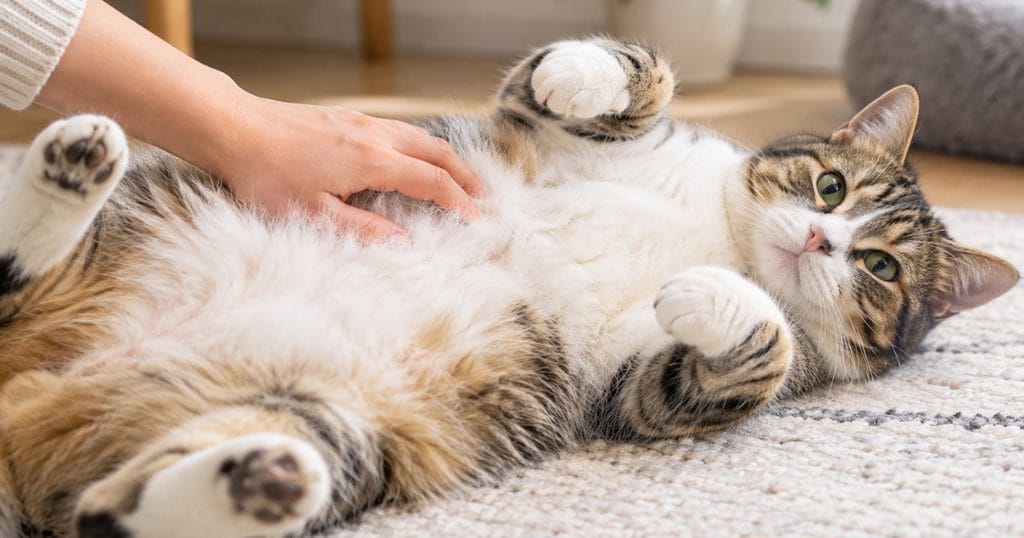
This one gets misunderstood constantly. When a cat rolls onto its back and exposes its stomach, it’s showing trust, not necessarily asking for a belly rub. Many cats will nip or swat if you actually touch it, so treat the gesture as a compliment rather than an invitation.
Soft, Short Meows
Cats rarely meow at each other, that sound is reserved almost entirely for humans. A soft, short meow aimed at you, especially paired with relaxed body language, is a direct form of communication built just for your relationship.
Purring
Purring is often seen as a sign of contentment, but it doesn’t always mean happiness. A cat may purr when they’re being petted or cuddled, showing affection and comfort in your presence. Cats can also purr when they feel stressed, such as during a vet visit. Look at their body language too. A relaxed posture, slow blinking, and an upright tail can show that your cat is happy and comfortable around you.
If you want to learn about cat stress symptoms, read our full article on cat stress symptoms.
Greeting at the door
This behavior reflects their internal clock and routine, indicating they recognize your schedule and eagerly anticipate your return. If they rush to meet you, it’s a clear indication that they missed you. A cat curling their tail around your legs is displaying affection and trust, while a rattle tail can signify excitement or a desire for attention. This combination of behaviors reveals that your cat values more than just food or fresh water.
Following You Around
If your cat trails you from room to room, it may be a sign that they enjoy your company and feel connected to you. Your cat may also follow you because of curiosity or a desire for attention.
Tail Language
A relaxed, upright tail, sometimes with a slight curl at the tip, usually means a happy and confident cat. Watch how your cat’s tail moves around you, as a tail held up near you can be a sign of trust and affection. If you notice your cat’s tail vibrating or shivering, it may be a sign of excitement or happiness. This behavior is commonly seen during affectionate moments, such as when your cat rubs their head against you.
Sleeping Near You
A cat that chooses to nap beside you, or better yet on you, is showing real vulnerability. Sleep is when cats are most exposed, so picking a spot near you says a lot about how safe they feel.
How To Make Your Cat Love You
Creating a bond with your cat goes beyond standard pet care; it requires understanding their unique language and behaviors.
- Daily Play Sessions A few minutes of wand toy or laser play each day gives your cat a positive, predictable reason to associate you with fun. Consistency matters more than the length of each session.
- Let Your Cat Set The Pace Forcing affection almost always backfires with cats. Letting your cat approach you on its own terms builds far more trust than picking it up whenever you feel being close to them.
- Learn Its Specific Cues Every cat has their own version of these signs, so spend time learning what your cat does when they feel happy, relaxed, or uncomfortable.
FAQs
How to Tell If Your Cat Loves You?
You can tell your cat loves you when they follow you around, slow blink at you, cuddle close, or gently headbutt you. These sweet behaviors show that your cat feels safe, comfortable, and connected to you.
How Do Cats Show Love?
Cats show love through slow blinking, purring, kneading, grooming, and staying close to you. Each behavior is a sweet way of showing trust, comfort, and affection.
Does My Cat Trust Me?
Yes, your cat may trust you if they relax around you, sleep nearby, or show their belly without fear. Following you, and enjoying gentle petting are also signs that your cat feels safe with you.
Does purring always mean a cat is happy?
Not always, purring can signal contentment, but it can also appear when a cat is anxious or self soothing. Body language, ear position, and the situation around the purring help clarify which one it is.
Conclusion
Cats communicate constantly, just not in the loud, obvious way dogs do. A slow blink from across the room, a quiet decision to nap near your feet, or a soft chirp when you walk in the door all carry real meaning once you know how to read them. Give your cat time, respect the pace it sets, and keep showing up with the same small routines. The bond you’re looking for is very likely already there.