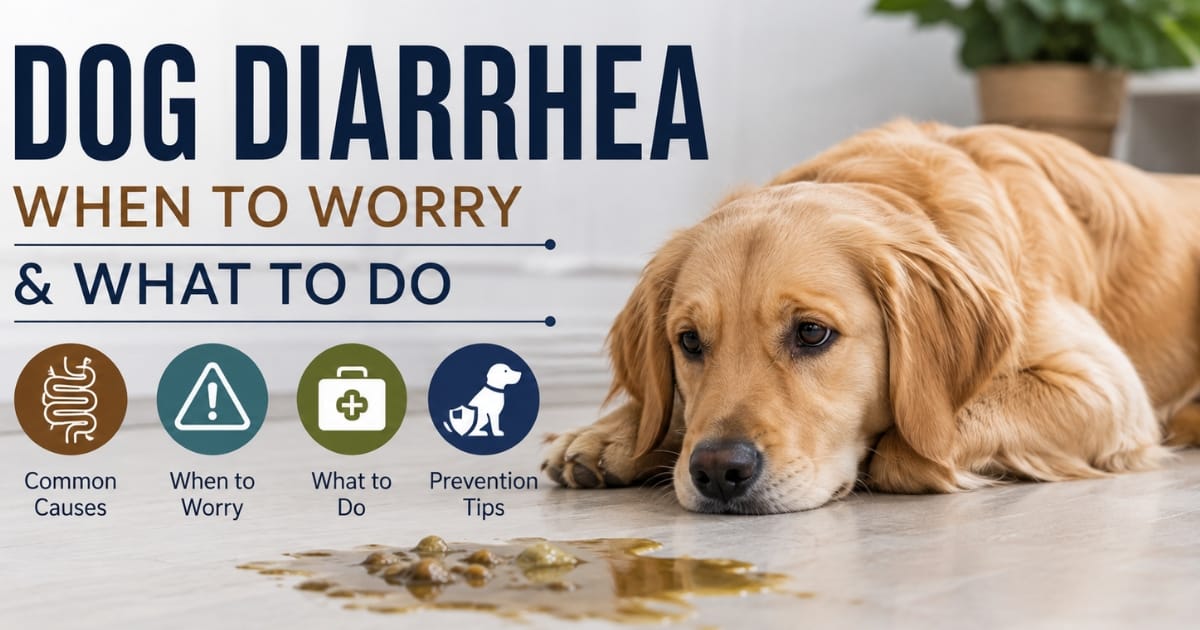
Dog Diarrhea When to worry & what to do
Dog diarrhea is not just a messy annoyance; it often occurs at the most unexpected times, like 2 a.m. or during a relaxed walk. Loose or watery stools can signal a variety of underlying health issues. We’ll discuss the common causes of dog diarrhea, practical tips for managing these stressful situations, and when it’s essential to consult a veterinarian.
Key Takeaways
| Dog diarrhea can be harmless, but persistent or frequent episodes need attention. Recurring loose stools may stem from diet changes, stress, parasites, or digestive problems. Watch for blood, vomiting, weakness, or dehydration, as these can signal a serious issue. Mild diarrhea may settle with proper home care, while ongoing symptoms need veterinary evaluation. Diagnostic tests can reveal the underlying cause and guide effective treatment. If your dog’s condition worsens or you’re concerned, contact your veterinarian quickly. |
Types of Dog Diarrhea
When it comes to dog diarrhea, understanding the different types can be important for pet owners.
- Osmotic Diarrhea occurs when something disrupts the absorption of nutrients in the intestines, often due to imbalances in the diet or certain medications. This type typically resolves itself when offending substances are removed from your dog’s diet, a reassuring reminder of how sensitive their digestive systems can be.
- Secretory Diarrhea is characterized by the intestinal lining actively secreting fluids, often resulting from infections or toxins. This type can be more challenging, as it may require veterinary intervention to manage underlying causes.
- Exudative Diarrhea involves inflammation, leading to increased mucus and blood in the stool, hinting at more severe issues, whether infections or gastrointestinal diseases.
- Rapid Intestinal Transit Diarrhea occurs when food moves too quickly through the digestive tract, often resulting after a sudden diet change or gastrointestinal upset.
Is Dog Diarrhea an Emergency?
If your dog has been dealing with diarrhea for more than 24 to 48 hours, it could signal an underlying issue that needs attention. Puppies and senior dogs are especially vulnerable — if your furry friend falls into either category, don’t hesitate to consult your vet. Symptoms like lethargy, decreased appetite, fever, belly pain, vomiting, or abdominal distention (swelling) should be taken seriously. If you suspect your dog has swallowed a toxin, seek veterinary care immediately.
Common causes of diarrhea in dogs
Dog diarrhea can be categorized into two broad types: Primary causes and secondary causes.
Primary Causes of Dog Diarrhea
Primary causes begin within the gastrointestinal (GI) tract and directly affect the stomach or intestines. Common triggers include:
- Diet Changes
- Spoiled Food or Table Scraps
- Inappropriate Foods
- Foreign Objects
- Food Allergies or Sensitivities
- Intestinal Parasites
- Bacterial or Viral Infections
- Inflammatory Bowel Disease (IBD)
Secondary Causes of Dog Diarrhea
Secondary causes start outside the digestive tract but can affect bowel function. Possible causes include:
- Toxin exposure
- Stress/anxiety
- Hormonal disorders
- Pancreatitis
- Liver/kidney disease
- Certain medications
- Cancer
- Other underlying diseases
Understanding whether diarrhea comes from a direct digestive problem or another health condition can help your veterinarian determine which diagnostic tests and treatment options may be appropriate.
Why does my dog’s diarrhea keep coming back?
Recurring diarrhea in dogs can be a confusing issue for pet parents. One common reason for these frustrating flare-ups is a sensitivity to certain ingredients in their diet. Even if you’ve transitioned to a high-quality dog food, your furry might still react poorly to specific proteins or grains. It’s worth checking any recent dietary changes or added treats that could be contributing to digestive problems.
Stress patterns
Stress can greatly affect your dog’s gastrointestinal health, often causing diarrhea. Situations such as boarding, the arrival of visitors, or travel can make dogs feel anxious. Symptoms may not be limited to digestive problems; behavioral changes, such as increased lethargy or excessive barking, can also occur. Providing a familiar blanket or toy can help create a sense of security during stressful times.
Diet-Linked Patterns
Flavored medications and frequently changing treats, often used for training or rewards, may upset your dog’s digestive system. Even small amounts of table food shared as an occasional treat can cause stomach upset.
Unresolved underlying causes
When a dog’s diarrhea improves and then returns, it often indicates an underlying issue that requires further investigation. Common causes can include infections, parasites like worms, or even undiagnosed chronic digestive conditions. These recurring episodes are important signals from your pet’s body that something is wrong. Understanding the potential causes can help create an effective treatment plan and restore your dog’s health.
How to treat dog diarrhea: What can I safely do at home?
When your dog experiences diarrhea, treating it at home can be straightforward if you follow key guidelines. Start by offering small, frequent meals of a bland diet, such as boiled chicken and rice. This gentle approach allows the digestive system to recover while still providing essential nutrients. Ensure your dog has access to fresh water at all times to prevent dehydration.
As you monitor your dog’s condition, pay close attention to the frequency and color of their stools. Keeping a detailed log can help you determine whether the situation is improving or getting worse. It’s important to avoid treats and table scraps during this time. In some cases, your veterinarian may recommend temporarily withholding food, but this should only be done under their guidance.
If diarrhea persists or is accompanied by other symptoms, consult your veterinarian about potential treatments, such as fluid therapy or medications like antibiotics and anti-parasitic medicines. For specific conditions, your vet may also recommend monoclonal antibody treatment.
How Veterinarians Diagnose Dog Diarrhea
Diagnosing dog diarrhea involves a comprehensive approach that begins with gathering the dog’s history. Veterinarians will inquire about recent changes in diet, potential exposure to toxins, and stress factors that could upset your dog’s digestive system.
During the physical exam, the vet checks for signs of dehydration, abdominal pain, or any indications of distress. Blood tests can reveal infections, organ dysfunction, or underlying health issues, while a fecal exam helps detect parasites or bacteria. A Parvo test may be administered, especially for puppies or unvaccinated dogs. If these tests don’t yield clear answers, advanced diagnostics such as X-rays or biopsies may be considered to rule out more severe conditions.
This thorough approach ensures that your furry friend receives the best care possible, ultimately leading to a more accurate diagnosis and effective treatment.
Conclusion
Keep track of your dog’s symptoms, including how often diarrhea occurs and how severe it is. If the problem continues for more than a day or comes with vomiting, low energy, or blood in the stool, contact your veterinarian. Identifying possible triggers, such as diet changes, stress, or infections, can help your dog receive the right care and recover sooner.
FAQs
What can I give my dog for diarrhea?
For mild diarrhea, provide fresh water and follow your veterinarian’s advice about a bland diet or appropriate food. Avoid treats, table scraps, and sudden food changes until your dog’s stools improve.
Should I change my dog’s diet if they have diarrhea?
Avoid making sudden changes to your dog’s regular food. Your veterinarian may recommend a bland diet, such as plain boiled chicken and white rice, for a short time. Follow their guidance on feeding and gradually return to the regular diet when appropriate.
Why does my dog’s diarrhea keep coming back?
Recurring diarrhea can have several causes, including food sensitivity, parasites, stress, infections, or chronic digestive problems. If the episodes keep returning, your veterinarian may recommend tests to identify the underlying cause.
My dog has had diarrhea for several days. What should I do?
If diarrhea continues for several days, contact your veterinarian rather than relying only on home care. Prolonged diarrhea can lead to dehydration and may indicate a condition that needs treatment.
How can I prevent diarrhea in my dog?
Prevent diarrhea by maintaining a consistent diet, avoiding table scraps, ensuring your dog is up to date on vaccinations, and regularly deworming them as advised by your vet.