
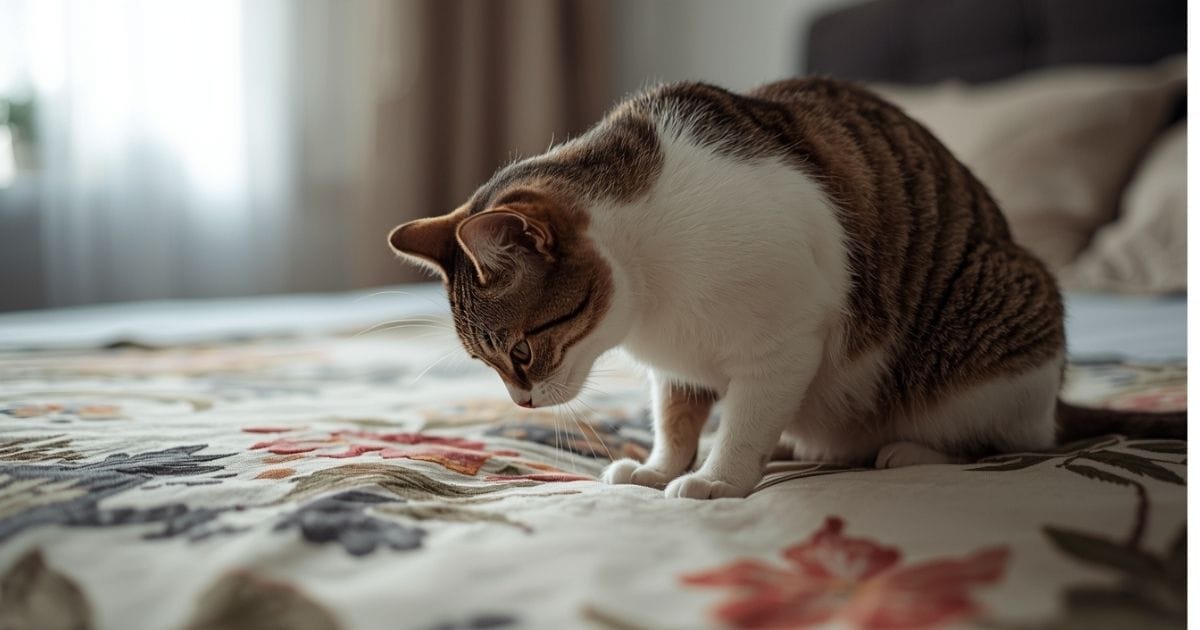
Why Is My Cat Peeing on the Bed and How To Stop It
Finding your cat peeing on your bed can be quite exasperating, and you’re not alone in facing this challenge as a pet owner. This behavior may arise from various issues, such as health problems or stress, which emphasizes the need to pinpoint the root cause.
In this article, we will delve into the possible reasons for your cat’s inappropriate urination and provide effective strategies to address the problem. Our goal is to help you regain harmony in your home while enhancing the connection between you and your feline companion.
Why is My Cat Peeing on the Bed?
1. Stress and Anxiety

One of the primary reasons for a cat peeing on the bed is stress and anxiety. Several factors can contribute to a cat’s stress levels, such as:
- Relocating to a new house
- The addition or loss of a family member, whether human or animal
- Ongoing renovations within the home
When feeling anxious, cats often relieve themselves on flat surfaces like a bed. This behavior is linked to the comfort they derive from their own scent — urine contains pheromones that can be soothing.
2. Urinary Stones and Crystals
The presence of urinary stones or crystals can lead to a cat peeing on the bed as these formations irritate the bladder’s lining. This irritation may spark frequent urges to urinate, making it difficult for them to reach the litter box in time. Additionally, if they associate their litter box with pain, they might prefer the softness of a bed instead.
3. Urinary Tract Infections
Similar to urinary stones, urinary tract infections (UTIs) can cause irritation of the bladder, resulting in urgent urination. The discomfort associated with a UTI might drive cats to seek alternative surfaces, such as a cozy bed, as they might find the litter box’s texture unappealing during their time of illness.
4. Bladder Tumors
Though less common, cats can develop bladder tumors, which may lead to bladder cancer. The inflammation caused by the tumor can irritate the bladder, resulting in frequent urges to urinate. Due to the pain associated with this condition, a cat might choose the comfort of a bed over the litter box for relief.
5. Urinary Incontinence
Urinary incontinence in felines, which refers to their inability to retain urine, can result in uncontrolled urination on surfaces where they rest, including your bed. This condition can stem from various factors such as nerve damage, urethral blockages, infections like feline leukemia virus, or structural issues with the urethra or ureters, the conduits that transport urine from the kidneys to the bladder.
6. Kidney Disease
Kidney disease can lead to increased urination in your cat because compromised kidneys struggle to concentrate urine and retain water effectively. Consequently, your cat might feel the need to urinate more frequently and may not make it to the litter box in time, resulting in accidents on your bed.
7. Diabetes
Diabetes mellitus causes a rise in urine output as the body expels excess blood sugar via the kidneys, which also pulls in additional water, leading to larger volumes of urine. Hence, diabetic cats often need to urinate more frequently, and if they are in a hurry, they might use your bed as a bathroom.
8. Arthritis
Arthritis is a painful condition that often affects older cats, making it uncomfortable for them to navigate to a traditional litter box. If your senior cat is lounging on your bed and feels the urge to urinate, he may opt to relieve himself right there rather than risk discomfort by getting up and heading to the litter box, especially if it’s out of reach.
9. Cognitive Dysfunction
Cognitive dysfunction, which is a decline in mental capabilities, commonly occurs in cats over 10 years old and can lead to instances of urination on the bed. Affected cats may forget the location of their litter box, prompting them to relieve themselves on any nearby surface, including your bed.
10. Litter Box Dislike in Cats

Cats often have specific preferences regarding the location, size, and type of litter for their litter boxes. If a cat’s litter box is situated too close to their food and water bowls, placed in a noisy environment, or if it’s too small or filled with an unsuitable type of litter, the cat may refuse to use it. This could lead to the unwanted behavior of peeing on the bed instead.
Beds may seem like an appealing substitute for litter boxes since sheets are washed after each accident, and bedrooms typically offer a quieter and more open space. Understanding these factors is essential in addressing the issue of cat peeing outside the litter box.
How to Prevent Your Cat from Peeing on the Bed
To effectively stop your cat from urinating on your bed, you must first tackle the underlying reasons for this behavior.
If your cat is experiencing anxiety or stress, consider using calming products like Purina® Pro Plan® Calming Care probiotic powder, Feliway® Classic calming pheromone diffusers, or supplements containing L-theanine (such as Nutramax® Solliquin®) or alpha-casozepine (such as Zylkene®). Additionally, discussing medications such as clomipramine and fluoxetine with your veterinarian may be worthwhile.
In cases where inappropriate urination is linked to medical issues, collaborating with your vet is crucial. They can recommend dietary adjustments and medications to address your cat’s condition.
For cats averse to their litter boxes, follow these recommendations to rectify common litter box problems:
- Provide one litter box for each cat, plus an extra one. For instance, if you have two cats, you should have three boxes to allow for separate areas for urination and defecation.
- Experiment by relocating the litter boxes to see if this encourages your cat to use them more frequently.
- Try various types of litter, including options like clay, wood, or corn.
- Remove any covers from the litter boxes for better access.
- Opt for bigger litter boxes to provide your cat ample space for peeing.
- For cats with arthritis, provide boxes with lower sides for easier entry.
To further discourage your cat from choosing the bed as a bathroom, consider making it a less appealing spot. You can simply keep the bedroom door closed to restrict access.
Lastly, it’s important to use an enzymatic cleaner, such as Nature’s Miracle®, on any areas where your cat has urinated before washing the bed linens. This will help eliminate lingering odors, reducing the likelihood of your cat returning to the bed as a designated elimination site.
FAQs About Cat Peeing on the Bed
Cats may change their behavior due to stress, medical issues, or territorial disputes. A sudden change can signal discomfort or anxiety.
Avoid regular cleaners that may not eliminate the odor completely. Use enzymatic cleaners designed for pet urine to prevent your cat from returning to the same spot.
Signs of stress in cats include hiding, excessive grooming, changes in appetite, or vocalization. Pay attention to any recent changes in their environment.
Yes, conditions such as urinary tract infections, bladder stones, or diabetes can lead to inappropriate urination. A vet check is essential to rule out health problems.
Conclusion
In conclusion, cat peeing on your bed can be confusing, but it’s essential to respond with understanding. This behavior might signal health issues, anxiety, or litter box dissatisfaction. By monitoring your cat, adjusting their environment, and fostering a supportive atmosphere, you can help them feel more secure. If the problem persists, consider seeking professional assistance. With patience and care, you can restore harmony in your home.