
Toy Poodle Dog Breed Information
Toy Poodles are not just one of the smartest dog breeds but also one of the most prone to specific health issues? As a beloved companion known for their intelligence and playful nature, understanding the unique health and care needs of the Toy Poodle dog breed is essential for any prospective or current owner. We will explore common health concerns, grooming tips, and general care practices to ensure your Toy Poodle leads a happy and healthy life.
Toy Poodle Caring
| Characteristics | Information |
|---|---|
| Height | Under 10 inches |
| Lifespan | Ranges from 10 to 18 years |
| Breed Type | Toy breed |
| Shedding Rate | Very minimal |
| Temperament | Affectionate but tends to be somewhat anxious |
| Energy Requirements | Generally low energy |
| Typical Health Concerns | Dental problems, patellar luxation, ear infections, and tracheal collapse |
Toy Poodle dog breed is known for their high intelligence and strong desire to please, these dogs are relatively straightforward to train. Although their exercise requirements are less demanding than many other breeds, they still thrive on a daily walk and interactive playtime at home.
All Poodles, regardless of size, feature curly fur that necessitates regular grooming. Their hair grows continuously, so they require a trim approximately every four to six weeks.
Poodles have the added benefit of minimal shedding, which can make them a suitable option for individuals with allergies. It’s important to note that no dog is entirely “hypoallergenic.”
Health Issues for the Toy Poodle Dog Breed

The Toy Poodle breed typically enjoys a lifespan of 10 to 18 years and is generally considered a robust breed. However, throughout their lives, they may encounter certain health issues that necessitate attention.
Reputable breeders of Toy Poodles often conduct health screenings to minimize the risk of passing on inherited health problems, thereby producing healthier puppies. Understanding of your Toy Poodle’s health, you can utilize a dog DNA test, which screens for more than 230 genetic health conditions.
Progressive Retinal Atrophy (PRA)
Progressive retinal atrophy (PRA) refers to a collection of conditions that lead to the degeneration of photoreceptor cells in the retina. Initially, affected dogs may struggle with night vision, and over time, this can progress to total blindness. PRA is hereditary, and unfortunately, no effective treatments currently exist.
Patellar Luxation
In a healthy dog, the patella, or kneecap, fits snugly in a groove within the femur (thigh bone) at the knee joint. In the case of patellar luxation, the kneecap may dislocate from this groove, particularly when the knee is bent. This misalignment can lead to pain and possibly develop into arthritis eventually.
Dogs may display signs of discomfort, such as limping or running on three legs when the kneecap is out of position. While some instances may resolve on their own, more severe cases often require intervention. In milder situations, management strategies could include joint supplements like fish oils and glucosamine, along with lifestyle changes such as weight management and dietary modifications. For those Toy Poodles suffering from significant patellar luxation, surgical options may be pursued to correct the issue.
Legg-Calve-Perthes Disease
Legg-Calve-Perthes disease involves the breakdown of the femoral head, located at the top of the thigh bone, usually due to poor blood circulation. This condition commonly causes pain and limping.
It mainly impacts young dogs, especially Toy Poodle puppies younger than 18 months. While mild cases can often be treated with pain relief medications, more severe cases might require surgery to remove the femoral head.
Ear Infections
Ear infections in dogs arise from an overgrowth of yeast and/or bacteria in the ear canal. Symptoms may include visible debris, redness, foul odor, head shaking, and persistent scratching.
If you observe any of these symptoms, it’s essential to consult a veterinarian for a thorough examination. Often, ear infections can be treated effectively through cleaning the ear with veterinarian-approved solutions, administering prescribed medications, and investigating any underlying causes, such as allergies.
The Toy Poodle dog breed is particularly prone to ear infections compared to many other breeds. This susceptibility may be linked to their long ear canals and excess curly fur, which can retain moisture and debris. Regularly trimming — not plucking — the hair in the ear area may help decrease the likelihood of infections.
For dogs that experience frequent or chronic ear infections, addressing potential allergies is crucial for long-term relief.
Should symptoms continue or intensify, seek advice from your veterinarian for accurate diagnosis and care.
Dental Disease

Dental disease ranks among the most frequently encountered health issues in dogs, particularly in smaller breeds like the Toy Poodle. This condition arises from the accumulation of tartar and plaque, which can lead to bacterial infections in the tissues surrounding the teeth and beneath the gumline. If left untreated, it can result in the decay of teeth and bone.
To effectively prevent dental disease, daily brushing with toothpaste formulated for dogs is highly recommended. Additionally, certain diets, treats, and chew toys can assist in reducing plaque and tartar buildup.
Regular dental check-ups are essential for assessing your Toy Poodle’s oral health. These cleanings help to remove plaque and tartar, polish the teeth, and address any severely unhealthy teeth through treatment or extraction. Since dental disease can be quite painful, it may also adversely affect the overall health of your Toy Poodle’s internal organs.
Tracheal Collapse
Tracheal collapse is a condition where the trachea, commonly referred to as the windpipe, becomes flattened. This phenomenon often results from weakened cartilage rings or sagging membranes along the trachea.
Affected Toy Poodles may show symptoms such as a dry cough, which tends to worsen during eating or excitement. While most cases are manageable with medication, severe instances that hinder breathing might necessitate surgical intervention.
Toy Poodles appear to have a genetic predisposition to tracheal collapse. To help prevent this condition, maintaining your dog’s healthy weight is crucial. When walking your Toy Poodle, opt for a harness or a no-pull head-collar instead of clipping the leash to the collar, as this can reduce pressure on the trachea and minimize the risk of further injury.
Von Willebrand’s Disease in Toy Poodle Dog Breed
Von Willebrand’s Disease (vWD) is an inherited blood disorder that frequently affects Toy Poodles. This condition results in a shortage of a crucial protein known as von Willebrand factor, essential for the aggregation of platelets, which is necessary for effective blood clotting.
Dogs lacking sufficient amounts of this protein may experience difficulties with blood coagulation, leading to potential bleeding from areas such as the nose, vulva, bladder, or gums. Furthermore, affected dogs might have prolonged bleeding after injuries or surgical procedures.
It’s worth noting that some Toy Poodles with vWD might not exhibit significant bleeding issues until they reach later stages of adulthood. Consequently, veterinarians can assess von Willebrand factor levels to assist in diagnosis. It is advisable for pet owners to have their dogs tested for this condition before undertaking any scheduled surgeries, including spaying, neutering, or dewclaw removal.
Nutritional Guidance for the Toy Poodle
To provide your Toy Poodle with a well-rounded diet, consider feeding commercial kibble or wet food that adheres to the nutritional standards set by the Association of American Feed Control Officials (AAFCO).
For puppies, it’s best to select food specifically formulated for their developmental needs or suitable for all life stages. Adult Toy Poodles may benefit from dental-focused diets, which your veterinarian might recommend to help mitigate dental health issues.
For tailored advice on the most appropriate food for your Toy Poodle, consult your veterinarian. Brands like Royal Canin offer specialized diets designed for both Poodle puppies and adult dogs.
Before altering your Toy Poodle’s diet significantly, consult your vet.
How to Properly Feed a Toy Poodle

Toy Poodles, being a small dog breed, thrive on two to three meals each day. In contrast, Toy Poodle puppies require three to four smaller meals daily on a regular schedule to help regulate their blood sugar levels and avoid hypoglycemia.
How Much Food Does a Toy Poodle Need?
The ideal caloric intake for a Toy Poodle can vary based on several factors such as their size, metabolism, whether they are neutered, and their activity level. Consulting with your veterinarian is the best approach to accurately assess your dog’s nutritional requirements.
Moreover, dog food packaging typically offers helpful serving recommendations for pet owners. It’s important to note that for smaller breeds like the Toy Poodle, caloric intake from treats can accumulate rapidly.
Treats should constitute no more than 10% of your Toy Poodle’s daily calorie consumption, while the remaining 90% should be sourced from their regular dog food.
Nutritional Advice for Toy Poodle Dog Breed
Toy Poodles can experience advantages from incorporating omega-3 fatty acids (DHA/EPA) into their meals.
These essential fatty acids are present in skin and joint supplements, fish oil, and various dog food formulations. They function as natural anti-inflammatories beneficial for skin health, coat condition, kidney function, joint support, and heart wellness.
Toy Poodle Behavior and Training
Personality and Temperament of Toy Poodles
The Toy Poodle dog breed is known for its remarkable intelligence and strong desire to please its owners. They are lively and self-assured, especially when properly socialized from an early age.
While generally composed, Toy Poodles thrive on interactive play and exercise with their families. They are typically gentle around other pets and children; however, supervision is crucial during interactions due to their small size, as they can be inadvertently injured during play.
Behavior Patterns of Toy Poodles
These affectionate dogs form strong attachments to their families and may experience separation anxiety if left alone for long durations. They can also be sensitive to stressful situations, which may cause digestive issues due to sudden changes in their surroundings.
Given their high intelligence, Toy Poodles require mental engagement to prevent boredom — which can lead to excessive barking, jumping, or destructive behaviors. It’s important to keep your Toy Poodle occupied with a variety of interactive activities, toys, and training exercises.
Training Your Toy Poodle Dog Breed
Toy Poodles have a natural inclination to please their owners, making them relatively easy to train due to their intelligence.
Training is most effective when centered around positive reinforcement, which involves offering praise and tasty treats. However, it’s essential to monitor their treat intake to avoid overfeeding.
Engaging Activities for Toy Poodle
- Obedience training
- Nose work and tracking exercises
- Enrichment puzzles
- Agility courses
By maintaining a balanced approach to nutrition, behavior, and training, you can ensure a happy and healthy life for your Toy Poodle.
Poodle Dog Grooming
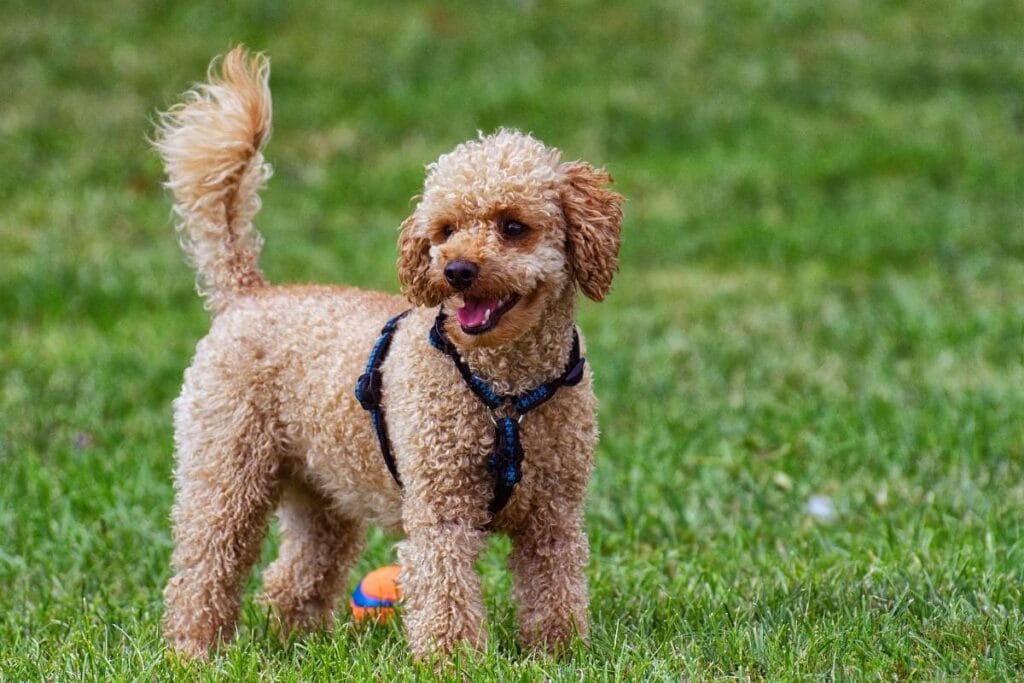
The Toy Poodle dog breed features hair, rather than fur, that continues to grow throughout its life and sheds minimally. However, this hair is thick and prone to matting, necessitating regular grooming.
Skin Care:
Typically, Toy Poodles should receive a bath every two to four weeks. However, your veterinarian might suggest more frequent baths based on your dog’s health and any existing medical issues. A mild, dog-specific shampoo and conditioner are ideal for maintaining their curly coat.
Coat Care:
Unless your Toy Poodle has a very short clip, it is essential to brush their hair daily to avoid matting. Make sure to detangle the hair right down to the roots.
Originally, Poodles were styled in the traditional Continental clip for hunting purposes. This grooming technique minimized the bulk of heavy hair, while still protecting key areas of the body from cold and wet conditions. Nowadays, this style is less frequently seen on household pets, as the short “puppy cut” demands less maintenance at home.
No matter what style you choose for your Toy Poodle’s haircut, it’s advisable to schedule professional grooming sessions every four to six weeks.
Eye Care:
Daily cleaning of your Toy Poodle’s eyes with a soft, damp cloth or a veterinarian-recommended eye cleaner can help eliminate debris. Some Poodles are susceptible to significant tear staining around their eyes, but rinsing the corners daily with saline can help mitigate this issue.
Additionally, the hair around your Toy Poodle’s eyes should be trimmed carefully to prevent irritation. If you observe squinting or any eye discharge, consult your veterinarian, as these symptoms may indicate a more serious eye condition.
Key Considerations for Toy Poodle Owners
The Toy Poodle is a fantastic option for nearly any home, as long as you are ready to dedicate time and effort to grooming.
Renowned for their high intelligence and desire to please, Toy Poodles respond exceptionally well to training through positive reinforcement, such as treats and verbal praise. This cleverness also necessitates ample mental engagement, which can be achieved through activities like scent walks, puzzle toys, and obedience exercises.
When given early socialization, most Toy Poodles exhibit a gentle demeanor toward children and other pets, making them a great addition to family life.
Frequently Asked Questions
Do Toy Poodles shed fur?
Toy Poodles shed very minimally. However, they require grooming almost daily to maintain their high-maintenance coat.
Are Toy Poodles considered hypoallergenic?
While no dog is entirely hypoallergenic, Toy Poodles are often seen as suitable companions for individuals with allergies to pets.
Are Toy Poodles suitable as indoor pets?
Certainly! Toy Poodles are renowned for their high intelligence and friendly nature. These dogs typically respond well to training and usually interact positively with young children, especially when they receive proper socialization from an early age.
What is the price range for a Toy Poodle?
The cost of acquiring a Toy Poodle puppy from a breeder typically ranges from $1,200 to $3,000, with prices varying based on lineage. Additionally, you can find Poodles and Poodle mixes available for adoption in shelters and rescues.
How large does a Toy Poodle grow?
When fully grown, a Toy Poodle usually stands at a height of no more than 10 inches and weighs between 4 and 6 pounds.
Do Toy Poodles have a tendency to bark?
Yes, Toy Poodles are known to bark frequently. Providing mental stimulation and regular exercise can help mitigate excessive barking.
Conclusion
Toy Poodle is a vibrant and intelligent breed that requires dedicated care and attention to thrive. Regular veterinary check-ups, a balanced diet, and consistent grooming are essential components of their health regime. Owners should also be mindful of the breed’s propensity for certain genetic conditions, ensuring proactive measures are taken to mitigate risks. Engaging in regular exercise and mental stimulation can significantly enhance their quality of life. By committing to responsible ownership, you can ensure that your Toy Poodle enjoys a long, happy, and healthy lifespan.