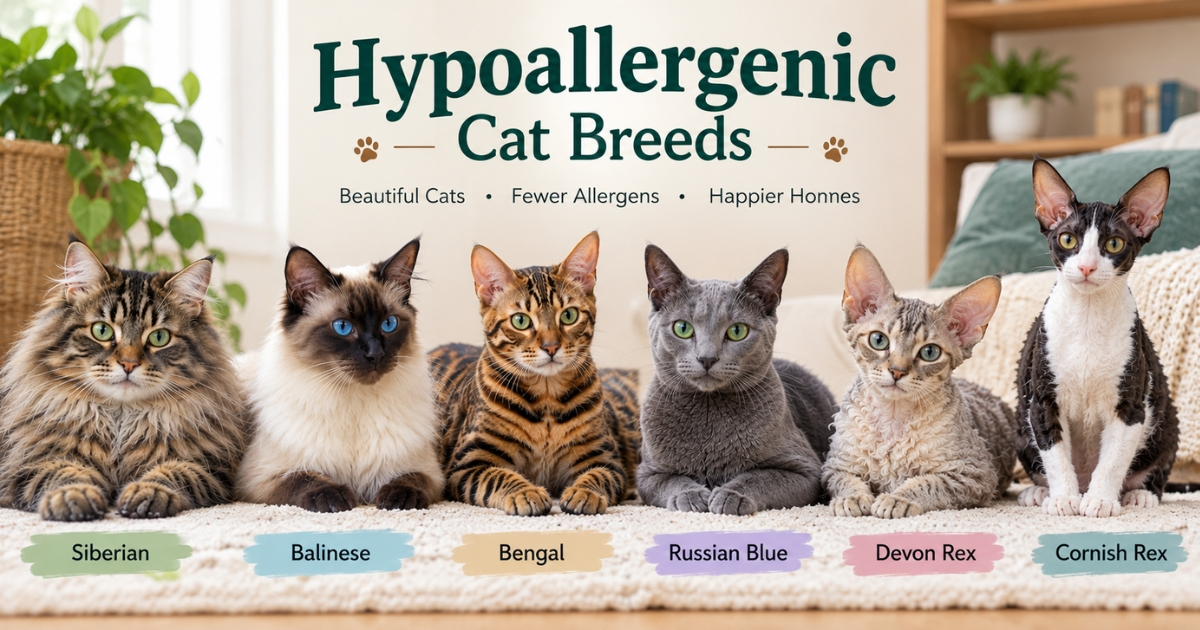
Top Hypoallergenic Cats for People With Allergies
No cat is 100% hypoallergenic, but certain breeds may trigger fewer allergy symptoms than others. Understanding what makes these cats different and exploring various hypoallergenic cat breeds can help people with allergies choose a suitable pet. Most cat allergies are linked to a protein called Fel d 1, which is produced mainly in cats’ saliva and skin and spreads through grooming and skin flakes.
Although these cats still produce allergens, some breeds may be easier for certain people to tolerate. Siberian and Balinese cats are often considered options for people with cat allergies. If you have always wanted a feline companion, learning about these breeds can help you make an informed choice before bringing a cat home.
What Cats are Hypoallergenic?
If you love cats but have allergies, you may wonder whether certain breeds are easier to live with. Although no cat is completely hypoallergenic, some breeds are often considered suitable options for people with allergies. Cat allergies are commonly linked to Fel d 1, a protein found mainly in cats’ saliva and skin secretions. Cats spread this protein onto their fur while grooming, and it can also be found in skin flakes.
Siberian and Balinese cats are often discussed as potential options for allergy sufferers. However, allergen levels vary from one cat to another, so spending time with a cat before bringing it home may help you understand how your body responds.
Siberian Cats

The Siberian cat is playful, affectionate, and highly social. These cats thrive on interaction with their human companions. Their curious nature can lead them into all sorts of adventures within the home, making them delightful companions for families.
Curious about the investment involved? The price of Siberian cats can range from $1,200 to $4,000, depending on lineage, breeder reputation, and specific traits. This price can vary depending on the breeder and the kitten’s background.
Siberian cats have thick coats and may shed more during seasonal changes. Regular grooming can help manage loose fur around the home. Although some Siberians may produce lower levels of Fel d 1, this varies between individual cats, so they are not guaranteed to be suitable for people with allergies.
Russian Blue
These cats are not only beautiful with their silvery-blue coats and green eyes, but they also possess a charming personality characterized by loyalty and playfulness. Russian Blue cats are often considered a hypoallergenic cat option because they shed relatively little. However, low shedding does not necessarily mean fewer allergens, as these cats still produce proteins that can cause allergic reactions.
Russian Blues also have a shy, reserved personality that endears them to their owners. For those looking to improve indoor air quality, using a HEPA filter can help reduce airborne allergens and make the home more comfortable for people with cat allergies.
Sphynx cats

Sphynx cats are known for their hairless appearance, but having little or no fur does not make them hypoallergenic. They still produce Fel d 1, a common cat allergen found in saliva and skin secretions. These allergens can collect on their skin even without a coat.
It’s important to note that while no cat is entirely allergen free, some people with cat allergies may find living with a Sphynx more comfortable. Sphynx cats require special care due to their lack of fur. Regular baths are essential to remove the buildup of oils and sweat, which can otherwise lead to skin issues and an unpleasant smell.
Devon Rex Cat
The Devon Rex is often hailed as a hypoallergenic cat breed, making it a suitable option for allergy sufferers. With its short, curly fur, the Devon Rex requires less grooming than many longer-haired breeds.
Devon Rex cats may be prone to certain health conditions, including hypertrophic cardiomyopathy, which affects the heart muscle. If you are away from home for long periods, consider whether you can provide the attention and companionship this social breed needs.
Cornish Rex Cat

Many owners wonder: are Cornish Rex cats hypoallergenic? Their short, curly fur sheds less than that of many other breeds, which can make coat care easier. However, low shedding does not mean a cat is allergy free. Cornish Rex cats still produce allergens in their saliva and skin secretions, which may cause reactions in sensitive people.
Cornish Rex cats are known for their lively and affectionate personalities. Their playful nature and high energy levels make them wonderful companions for families and individuals.
Balinese Cats
Balinese cats may appeal to people with allergies who want a beautiful pet that is relatively easy to groom. Known for their blue eyes and silky, medium length coats, these cats are often mistaken for their long haired Siamese relatives. Their single layer coat may shed less than some other cats, but shedding levels vary. Balinese cats still produce allergens, so they are not guaranteed to be suitable for people with allergies. This breed is intelligent and curious, making it enjoyable to spend time with through play and training.
Javanese cats

Javanese cats have soft, medium length coats and are known for their affectionate, social personalities. Although their coats may shed less than those of some other breeds, regular grooming helps prevent tangles and keeps their fur in good condition.
These cats enjoy human interaction and can make loving companions. However, they still produce allergens, so people with cat allergies should spend time with a Javanese cat before bringing one home.
Bengal Cat
Bengal cats are known for their leopard-like coats and energetic personalities. Their short coats generally require less grooming, and they may shed less noticeably than some other cats. However, Bengals still produce allergens and are not guaranteed to be a suitable choice for people with cat allergies.
When considering a Bengal cat, it’s essential to find a reputable Bengal cat breeder who prioritizes health and temperament, ensuring a well-adjusted pet that fits seamlessly into your lifestyle. Bengals don’t shed a lot, which can be a significant advantage for those concerned about cleanliness. This low-shedding trait is coupled with a coat that requires minimal grooming, just a weekly brush to remove dead hair and distribute natural oils.
Conclusion
Finding the right hypoallergenic cat can improve the quality of life for people with allergies. Breeds such as the Siberian, Balinese, and Bengal are often considered options for allergy sufferers, although allergen levels vary between individual cats. It’s essential to consider not just the hypoallergenic qualities but also the temperament and care requirements of the cat.
Regular grooming and a clean living environment can help reduce allergens, making it easier for you and your feline friend to live comfortably together. Consider visiting local shelters or breeders to meet these cats and find a companion that suits your home.
FAQs
What cat is most hypoallergenic?
No cat breed is completely hypoallergenic, but some may be easier for people with allergies to tolerate. Siberian, Balinese, Russian Blue, and Devon Rex cats are often considered options. However, allergen levels vary from one cat to another, so spend time with a cat before bringing it home.
What are hypoallergenic cats?
Hypoallergenic cats are breeds believed to cause fewer allergy symptoms in some people. Most cat allergies are linked to a protein called Fel d 1, which is found mainly in saliva and skin secretions. Cats spread it onto their fur while grooming. No breed is entirely free of allergens.
Can cats be 100% hypoallergenic?
No, all cats produce allergens, including hairless breeds such as the Sphynx. Some cats may cause fewer symptoms than others, but reactions depend on the individual animal and the person’s sensitivity. Regular cleaning and a HEPA air filter may help reduce allergens at home.
How expensive is a hypoallergenic cat?
The cost depends on the breed, breeder, and location. In the US, cats from reputable breeders may cost around $1,000 to $4,000 or more. Adoption from an animal shelter or rescue group is often less expensive. Remember to budget for food, litter, veterinary visits, and other supplies.