How Long Are Dogs Pregnant: Stages, Signs & Dog Pregnancy Tests
The dog gestation period typically lasts about 63 days, but this can vary slightly from 58 to 68 days. Understanding how long dogs are pregnant is essential not just for breeders but for all dog owners who want to ensure the health of their furry companions. In this article, we will discuss the stages of dog pregnancy, explore the signs of dog pregnancy week by week, and provide valuable insights to help you during this important time in your pet’s life.
How Long Does a Dog Stay Pregnant?

This timeframe can vary slightly depending on the dog’s breed, size, and individual health. For example, how long are small dogs pregnant in months? Small dog breeds may give birth a little earlier, usually around 58 to 64 days after mating.
As the due date approaches, watch for signs of impending labor, such as nesting behavior, restlessness, or decreased energy. Proper nutrition and regular veterinary check-ups throughout pregnancy can help support the health of the mother and her puppies.
Dog Pregnancy Test at Home
These tests typically work by measuring specific hormones, such as relaxin, which is produced during pregnancy. Owners should also be mindful of the behavioral changes that accompany pregnancy, such as increased appetite, nesting behavior, or even changes in temperament. Observing these signs can provide valuable insight into your dog’s condition.
Keep an eye on physical changes, like weight gain or enlarged nipples, which can further indicate pregnancy. If you’re ever in doubt, consulting with a veterinary professional is the best way to confirm your dog’s pregnancy and ensure her health throughout this important period.
Bellylabs Dog Pregnancy Test
The Bellylabs dog pregnancy test is an at-home test designed to help dog owners and breeders check for pregnancy. The test uses a small blood sample to detect relaxin, a hormone produced during pregnancy. It can be performed at home, making it a convenient option for owners who want an early indication of pregnancy.
Bellylabs pregnancy test results can be available within minutes when the test is performed according to the manufacturer’s instructions. Because testing too early can affect the result, it is important to follow the recommended testing time. If the result is positive or unclear, a veterinarian can confirm the pregnancy and provide appropriate care throughout the pregnancy.
Dog Pregnancy Test cost
When considering a canine pregnancy test, the cost can vary depending on the type of test and where it is performed. Veterinary clinics may use methods such as ultrasound or hormone testing to confirm pregnancy, with costs varying by clinic and location.
At-home canine pregnancy tests may be less expensive than veterinary testing, but they may not provide the same level of confirmation as a veterinary examination. If you are unsure about your dog’s pregnancy or have concerns about her health, a veterinarian can recommend the appropriate testing method and provide guidance throughout the pregnancy.
The Three Stages of Dog Pregnancy
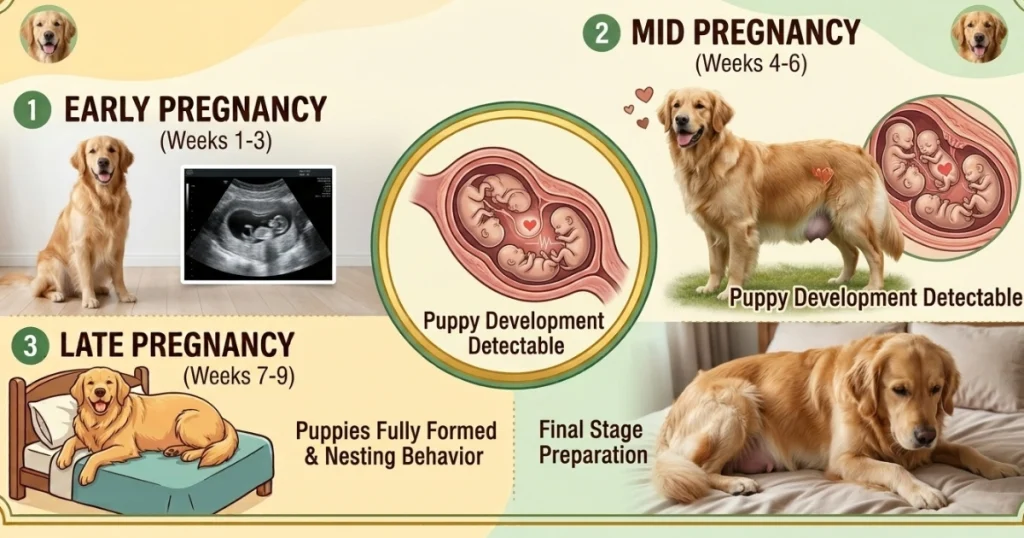
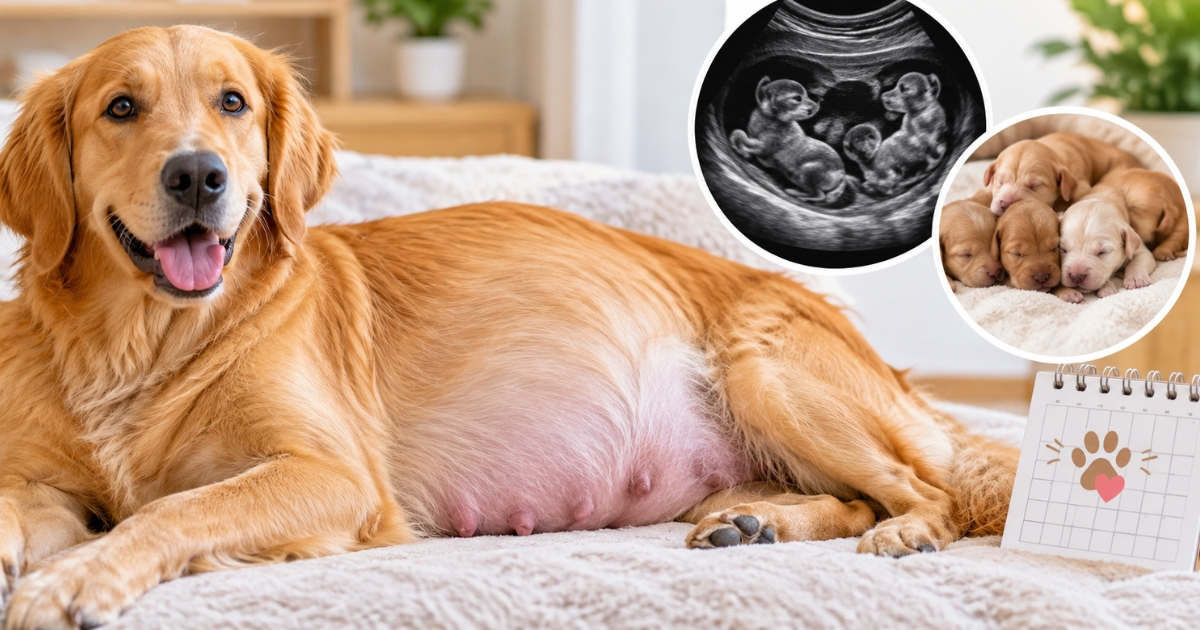
Understanding a dog’s pregnancy timeline helps you care for her every step of the way. Typically lasting around 63 days, canine pregnancy is divided into three stages:
1. First Stage: Embryo Development (Weeks 1–3)
During the first three weeks, fertilized eggs travel to the uterus and implant into the uterine wall. Physical changes are subtle at this point, though some dogs may experience slight mood shifts, extra clinginess, or a minor drop in appetite due to early hormonal changes.
2. Second Stage: Rapid Growth & Confirmation (Weeks 4–6)
By week four, a veterinarian can confirm the pregnancy using ultrasound. The fetuses grow quickly during this phase, forming vital structures like spinal cords and facial features. You’ll notice the mother’s belly expanding, along with a noticeable increase in her appetite and energy demands.
3. Third Stage: Preparation for Delivery (Weeks 7–9)
In the final weeks, puppies grow rapidly, developing bone structures, fur, and fully formed organs. The mother’s belly becomes significantly larger, and she will start seeking a safe, quiet space for nesting. Around day 63, her body naturally prepares for labor and whelping.
How to Tell If Your Dog is Pregnant
- Behavioral Changes
- Nipple Changes: (You may notice her nipples becoming larger and darker.)
- Morning Sickness
- Increased Appetite
- Weight Gain
- Nest-Building Behavior
- Changes in Energy Levels
While weight gain is common during pregnancy, unexpected weight loss can be a concern and may require veterinary attention. Learn more about the possible causes of dog losing weight and when to contact a veterinarian.
How Do Vets Confirm Pregnancy in Dogs
Veterinarians use several methods to confirm pregnancy in dogs, with each method providing different information about the pregnancy. An abdominal ultrasound can help visualize developing puppies from around three weeks into pregnancy. This non-invasive procedure can confirm pregnancy and provide information about the developing puppies.
Another method is the blood test for relaxin, a hormone produced by the placenta during pregnancy. This test can detect relaxin from around four weeks into gestation, helping confirm pregnancy even before some physical signs become noticeable.
Abdominal palpation may be performed around the 28-day mark. During this examination, a veterinarian gently feels the abdomen to check for developing puppies. This should only be performed by a veterinary professional. These methods can help confirm pregnancy and provide information about the health and development of the puppies.
Factors That Can Affect Pregnancy Length
Although the average dog pregnancy lasts about 63 days, the exact timing can vary between individual dogs. Several factors may influence when a dog gives birth.
Breed Size
Pregnancy length can vary between individual dogs and breeds. Small and large breeds may have slightly different gestation patterns, but the expected delivery date can vary even among dogs of the same breed.
Litter Size
Litter size may also be associated with differences in pregnancy length. Dogs carrying larger litters may give birth slightly earlier, while those carrying smaller litters may remain pregnant longer.
Health and Age
A dog’s overall health and age can affect how pregnancy progresses. Regular veterinary checkups can help monitor the mother and developing puppies and identify any concerns as the due date approaches.
Conclusion
Understanding the duration and stages of dog pregnancy is essential for any dog owner. From recognizing the early signs of pregnancy to preparing for the arrival of puppies, being informed can help ensure a smooth process for both the mother and her pups. Regular veterinary check-ups and appropriate maternity care are vital in safeguarding the health of the mother and her litter. It’s also important to equip yourself with knowledge about pregnancy tests for dogs, as they can assist in confirming your pet’s condition.